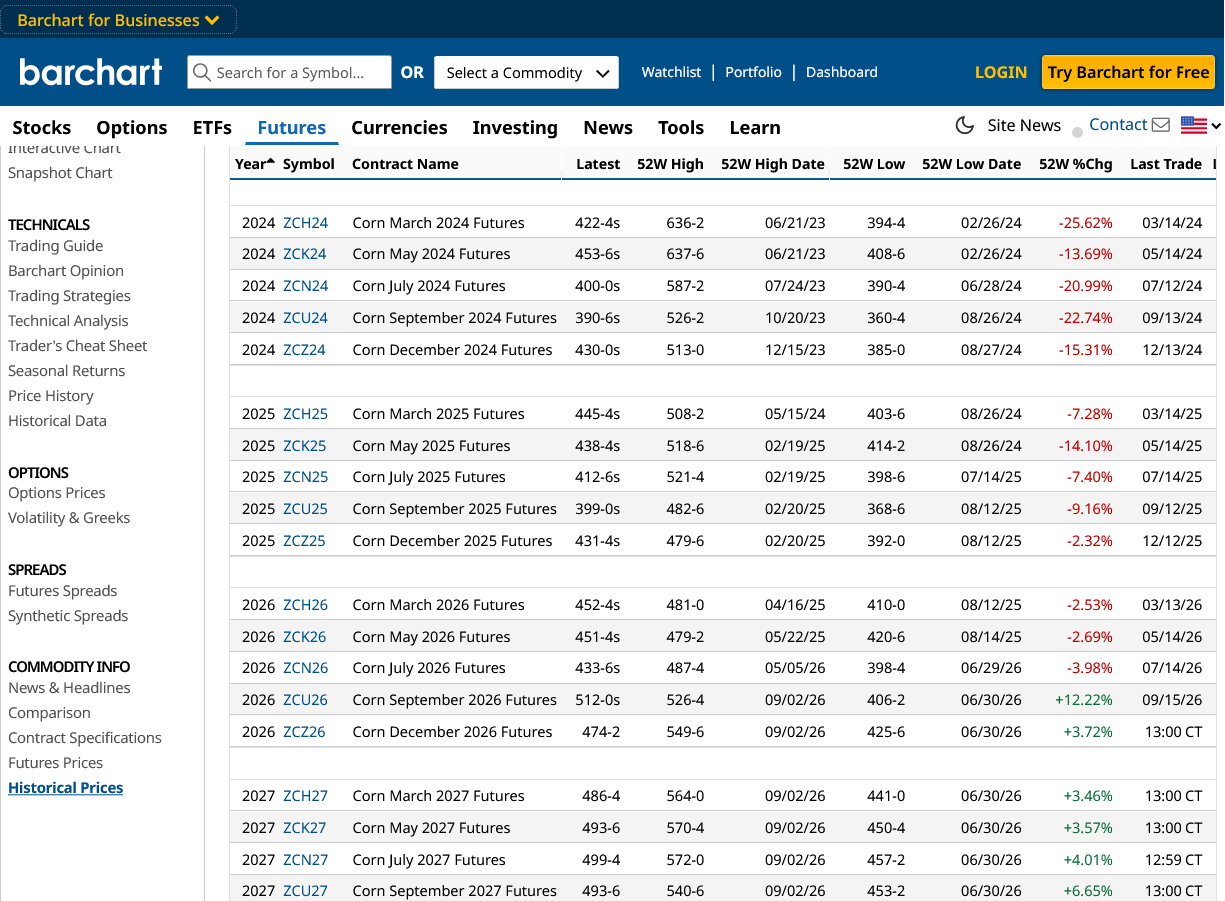
We've been covering this for coffee here:
By metmike - Sept. 28, 2026, 10:01 p.m.
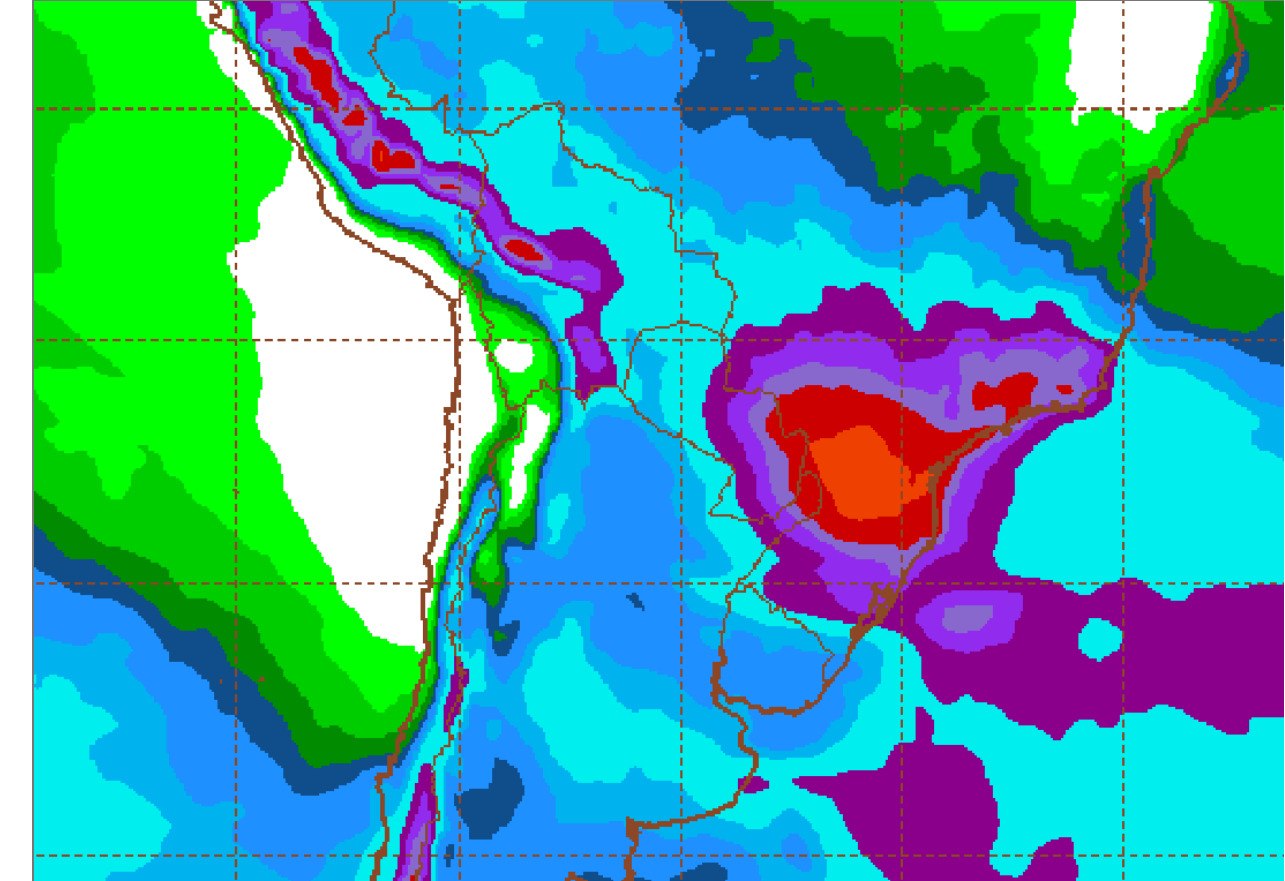
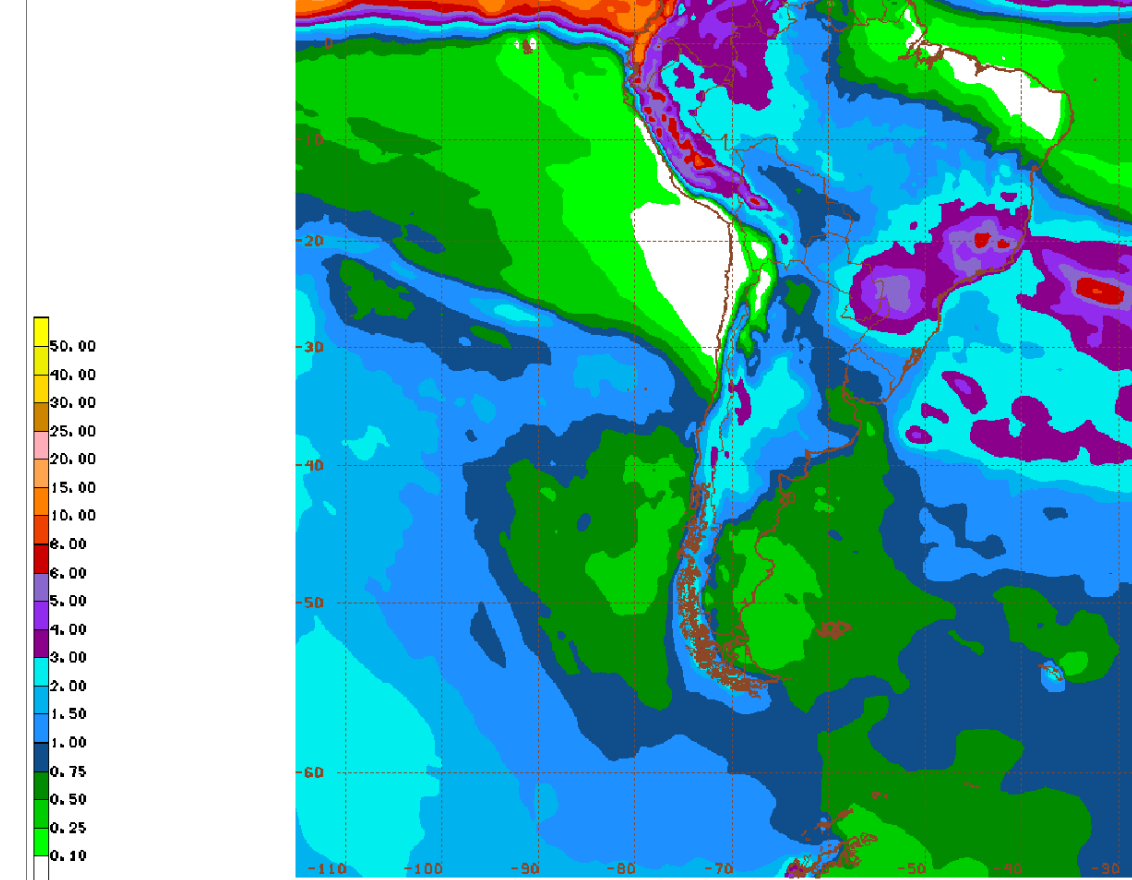
Last total 16 day rains for South America from the just out 18z GEFS:
Dark red=6 inches
Orange=8 inches
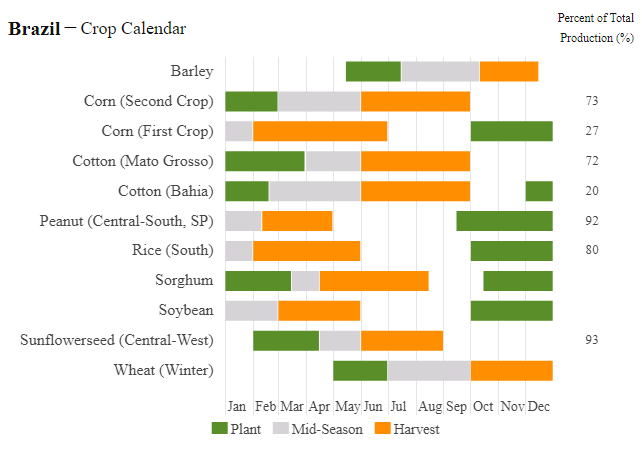
Bearish for coffee but too much rain for early planting of corn/beans in Southern Brazil with the crop likely to get planed late there this year. For instance, over 60% of the crop should be planted in Parana by the end of October, 90%+ by November 20. So it's still early. Parana has been especially wet recently and has red/orange below.
Rainfall anomalies from the last 12z European Ensemble model below.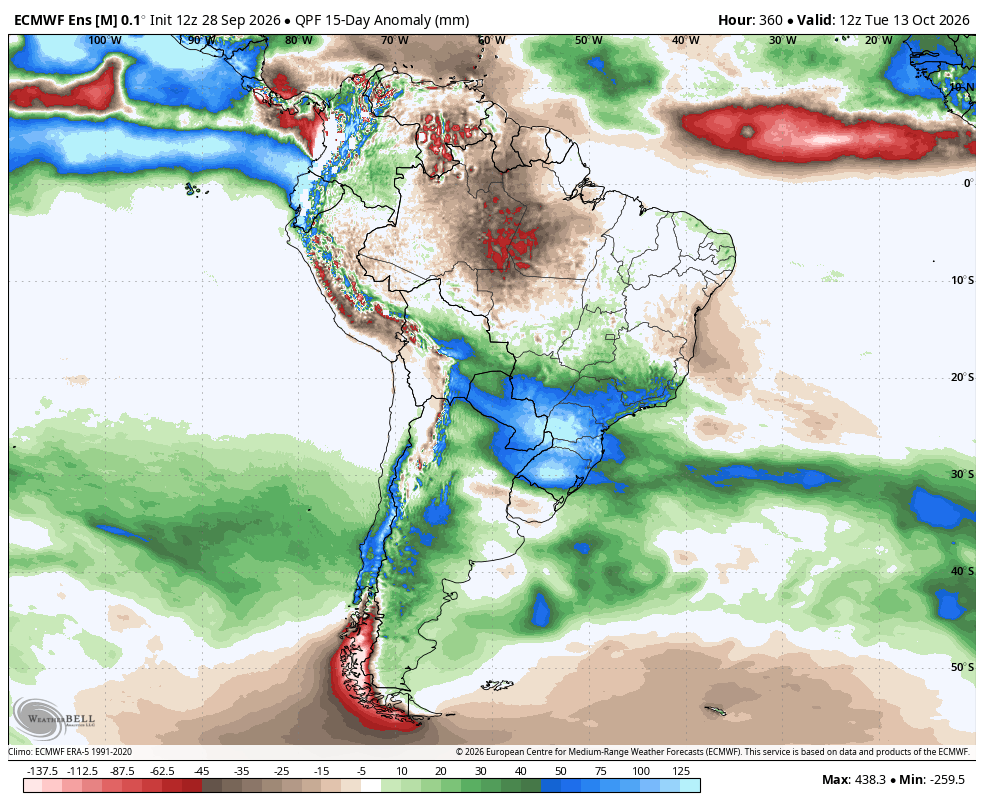
+++++++++++++++
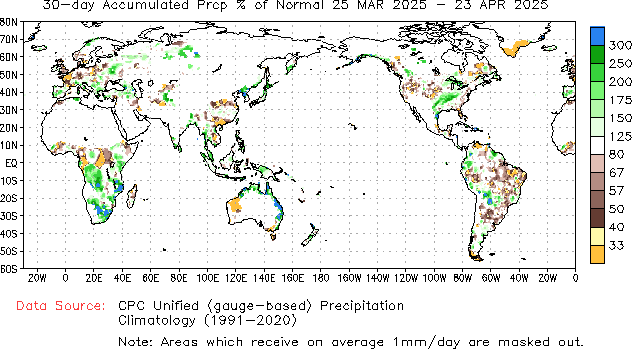
https://www.cpc.ncep.noaa.gov/products/Precip_Monitoring/Figures/global/n.30day.figb.gif
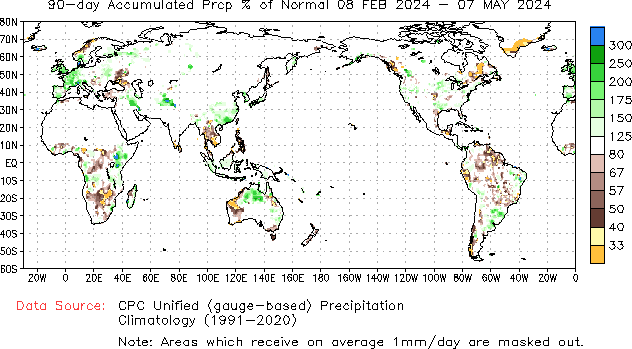
https://www.cpc.ncep.noaa.gov/products/Precip_Monitoring/Figures/global/n.90day.figb.gif
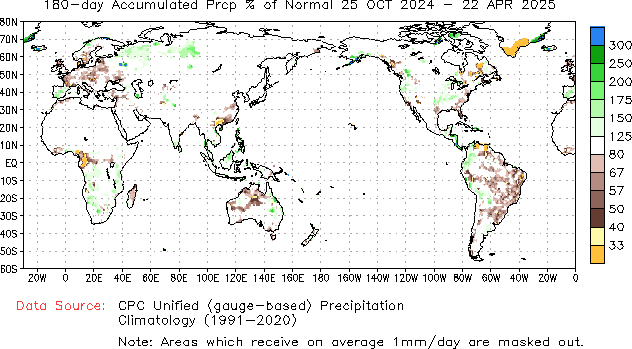
https://www.cpc.ncep.noaa.gov/products/Precip_Monitoring/Figures/global/n.180day.figb.gif
+++++++++++++
++++++++++++++++
The soils in Brazil don't hold water as well as our soils so they need more rain(and get more most of the time) but they also dry out quicker from heavy rains with less planting delays.
1. This is the week 1 rain anomaly from the last 0z European Ensemble model: WET for Coffee-land(except far northeast)
2. Week 2 rain anomaly: Drier. Note that far southern Brazil, especially Parana and Rio Grande Du Sol stay very wet. #1 producer, Mato Grosso dries out and is vulnerable to an El Nino drought this Winter.


https://interactive.carbonbrief.org/el-nino-explainer/index.html
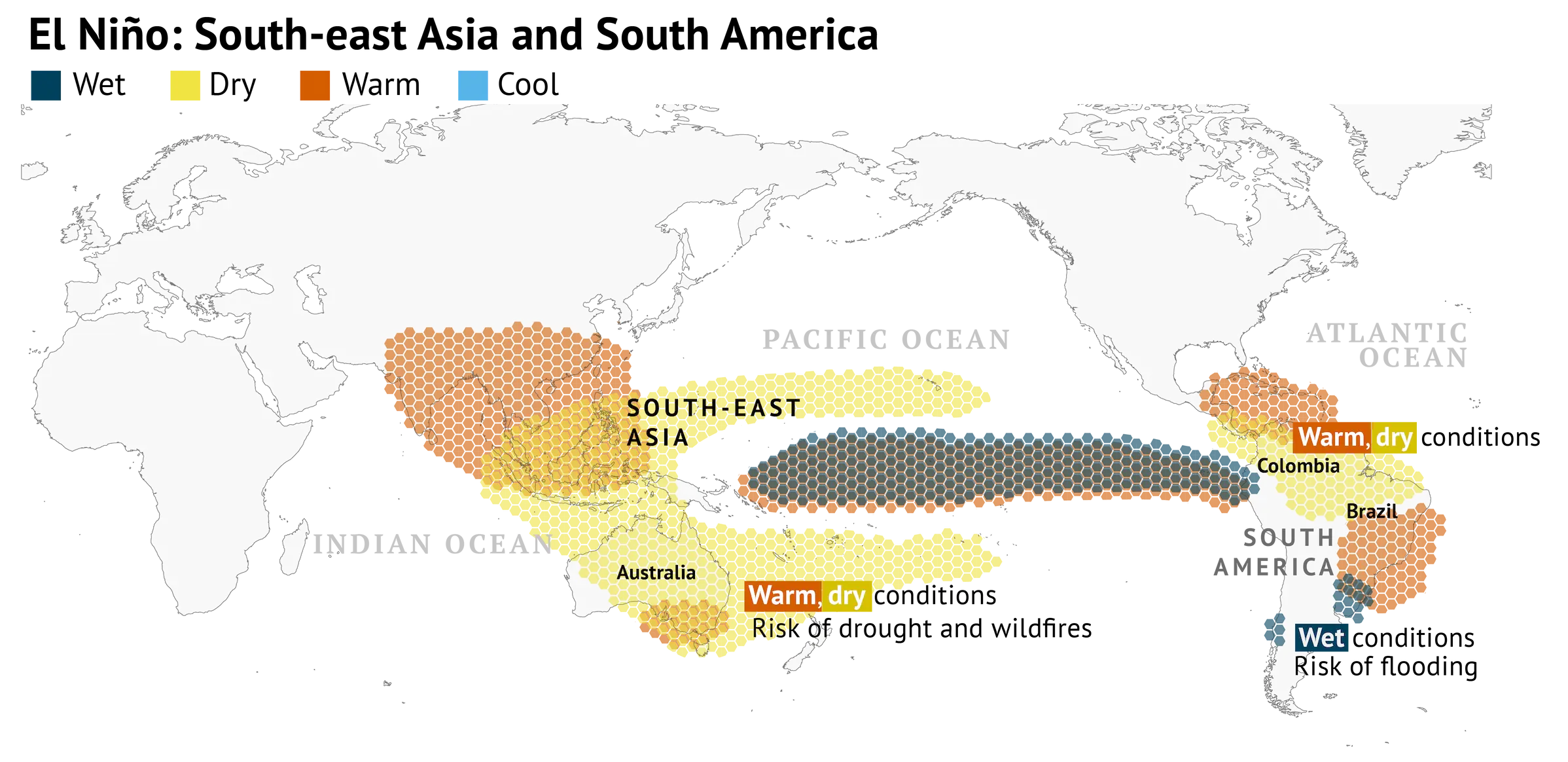
This is from the just out 12z European ensemble model, rainfall anomalies.
1. Week 1: Excessive wetness in southern Brazil continues.
2. Week 2: Wetter in central Brazil coffee and beans vs earlier this week.
3. Week 2 from 36 hours ago. The rains did not extend as far north!


This was the last 15 day total precip forecast from the 06 GEFS. Tons of rain for coffee-land!
Nothing too extreme anywhere. Maybe a bit dry in parts of Argentina and Mato Grosso, Brazil.
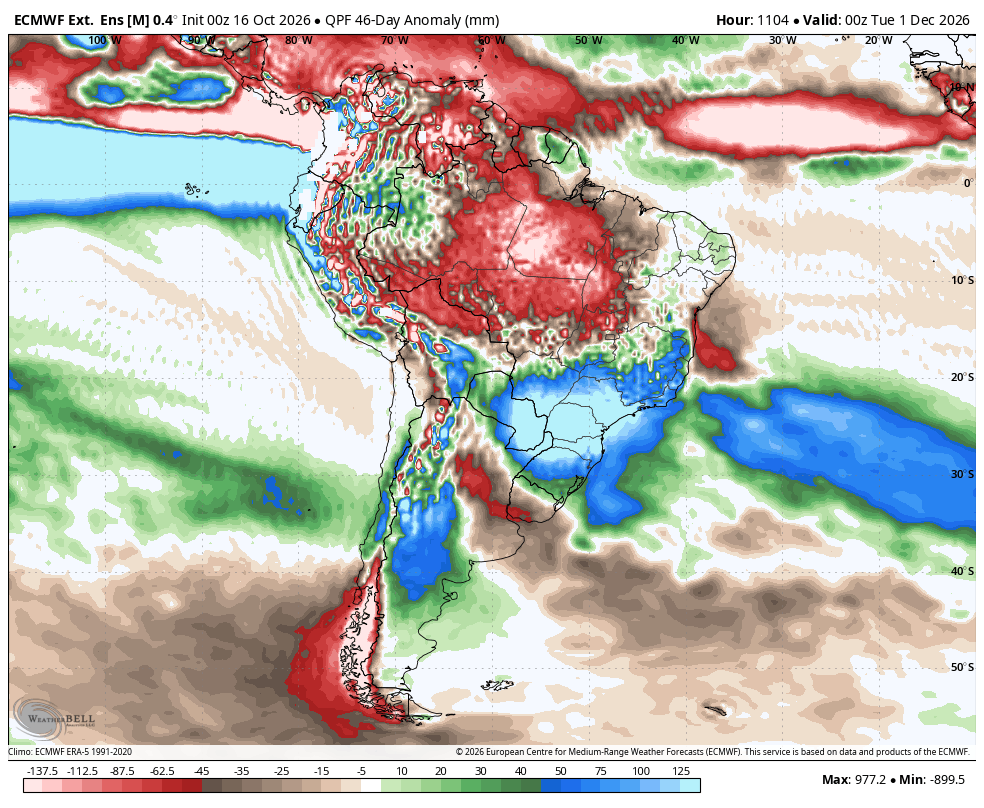
Total 46 day rain anomalies from the just out European model Ensemble thru December 1st. Very day in Central Brazil!!!! This would greatly impact #1 soybean producing state of Mato Grosso in Brazil.
This is a risk from the Super El Nino's impact. The question is how far south will the very dry, potentially hot weather be in Central Brazil?
We know that Super El Nino's CAUSE THIS. However, the excessive wet and dry zones will shift to the north or south based on a diversion from large scale weather features that impact the steering currents interacting with the powerful El Nino!
This was the last 15 day total precip forecast from the 06 GEFS. Tons of rain for coffee-land!
Total 46 day rain anomalies from the just out European model Ensemble thru December 1st. Central Brazil, including Mato Grosso look pretty dry!
Total amounts in mm below: Total amounts in mm below: Excessive rain in Parana/Santa Catarina back to eastern Paraguay.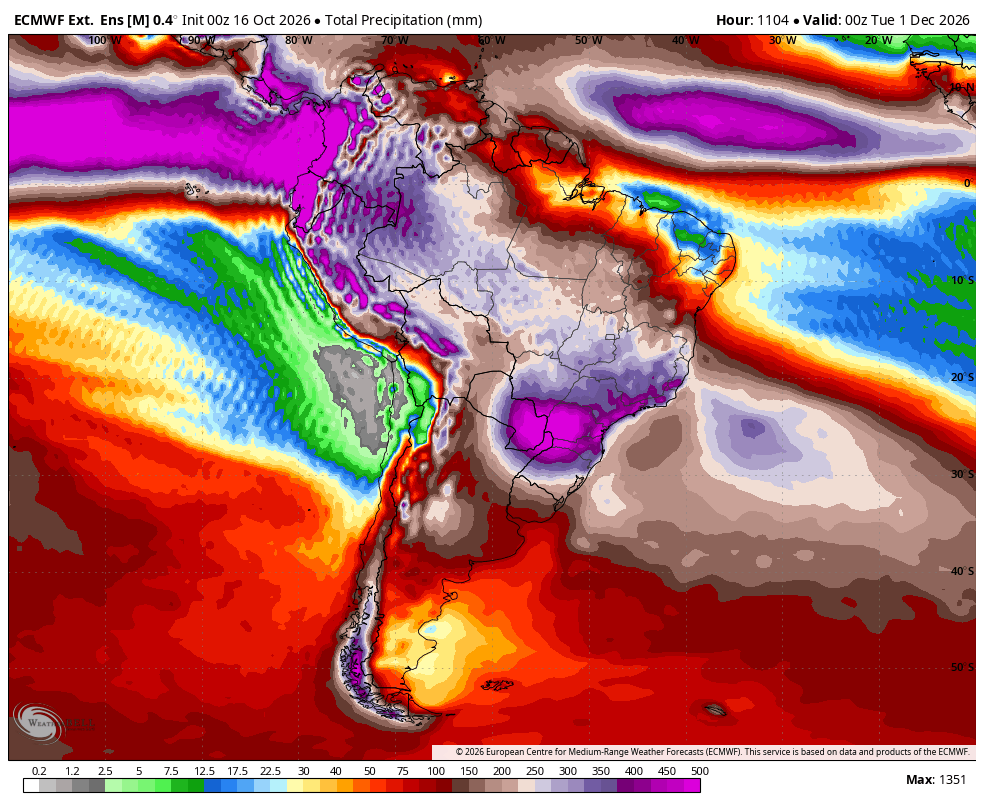
This is just November rain anomalies:
Mato Grosso in CENTRAL Brazil get's pretty dry, especially the northern half of the state.

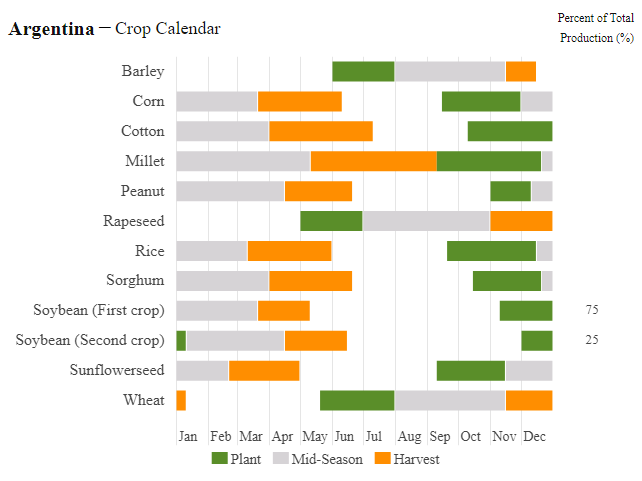
I would like see Northern Brazil really become dry by around Nov. 14th and beyond. Argentina right now looks fine and ahead of plantings.
SA. due for some weather problem. Between China, SA. Crude Oil and maybe lower Corn yields we look for that harvest low this month (end of the month??)
1. I would like see Northern Brazil really become dry by around Nov. 14th and beyond. Argentina right now looks fine and ahead of plantings.
2. SA. due for some weather problem.
3. Between China, SA. Crude Oil and maybe lower Corn yields we look for that harvest low this month (end of the month??)
Thanks much, bcb!
1. They hardly grow any beans in Northern Brazil.
By metmike - Sept. 28, 2026, 10:16 p.m.
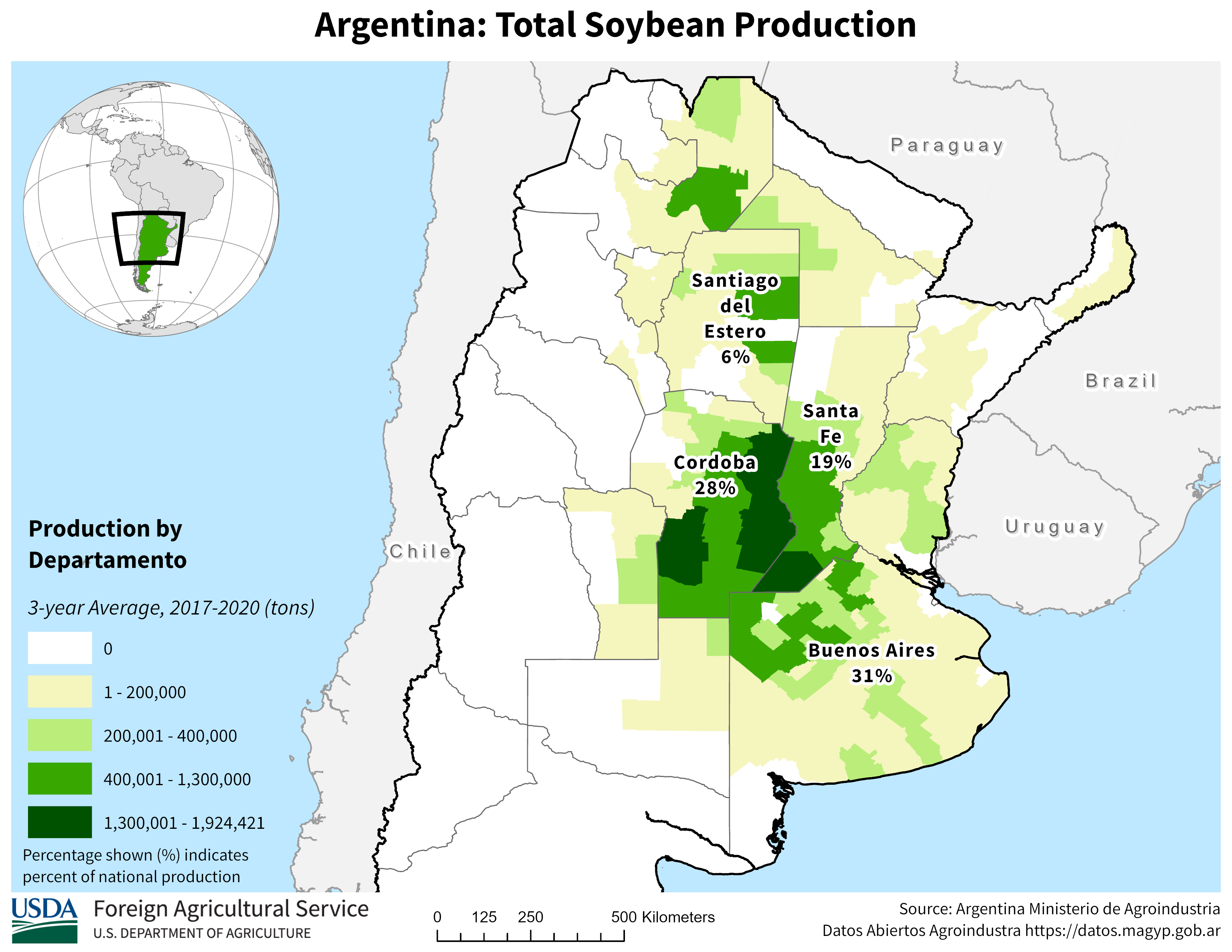
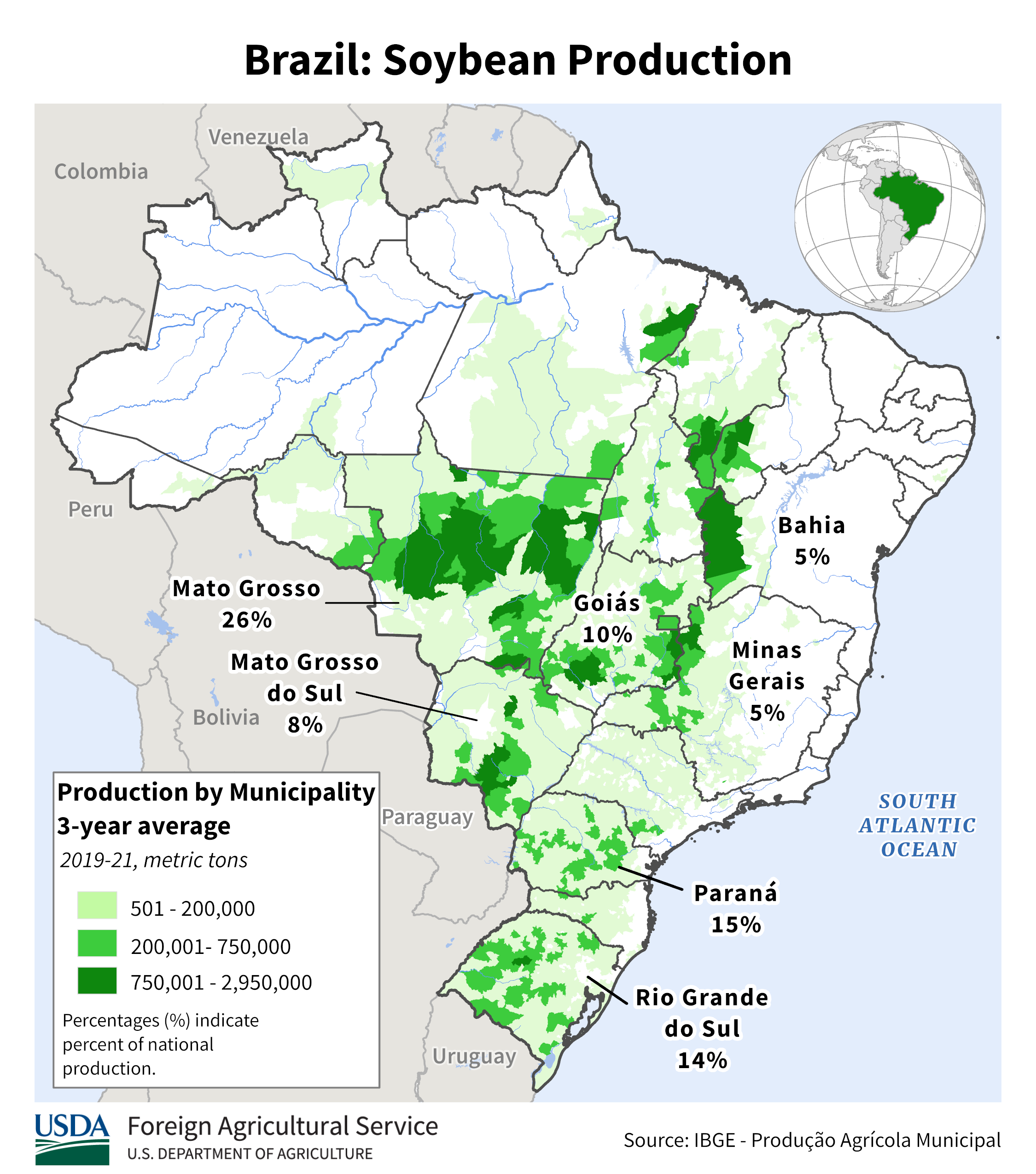
https://ipad.fas.usda.gov/rssiws/al/crop_production_maps/Brazil/Municipality/Brazil_Soybean.png
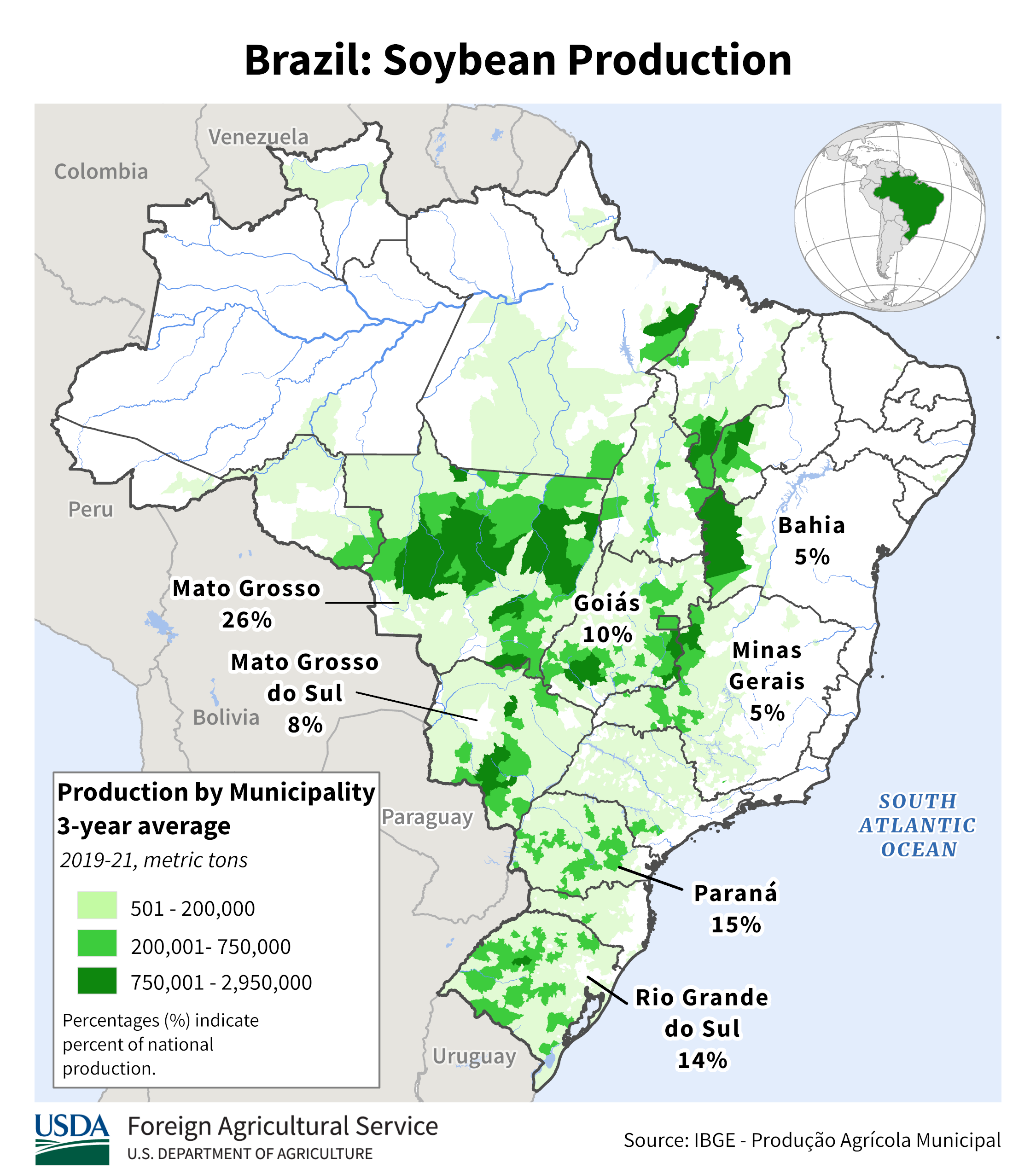
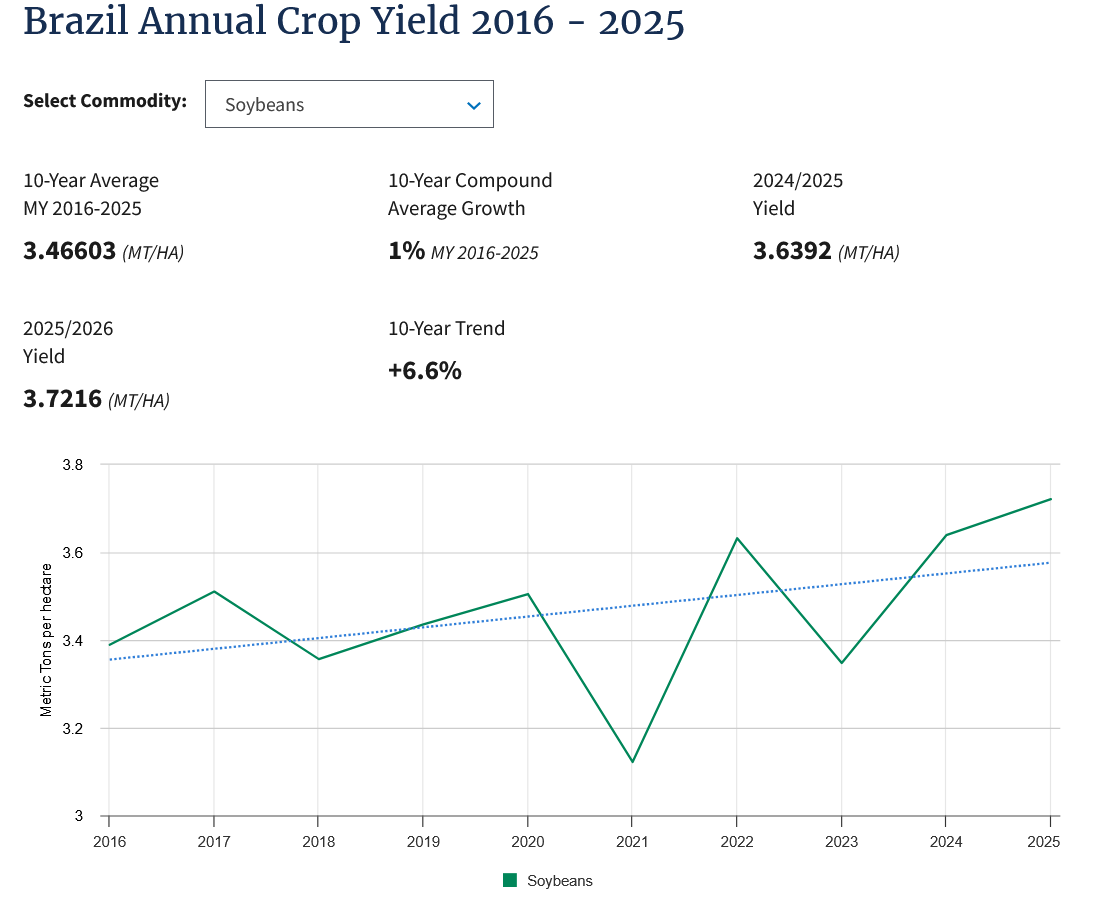
2. Crop production and yields are an Independent variable that are not impacted by previous years. In fact, successive good years are more likely increasing the odds for the next year to be a good year, the opposite of it causing the odds of a bad year to go up.
The SUPER El Nino is a different variable this year that has never been there before which is the main reason that extreme weather chances are elevated in the Southern Hemisphere this upcoming growing season.
3. On the harvest low. Interestingly, seasonals the past decade have shifted and the lows for corn, often occur in August/September in the earliest stages of harvest in the Southern states where it was planted and matured quickest.

https://www.tradingview.com/symbols/CORN/seasonals/
++++++++
++++++++++
This is probably "some" of it:
AI Overview
Corn market and basis lows arrive earlier due to shifts in Harvest Pressure and how modern crop marketing works. [1, 2]Key Reasons for Earlier Harvest Lows
This is very interesting.
1. Here's the last 30 day period for rainfall anomalies from the 46 day outlook of the already updated European Ensemble model that is for most of November into the start of December. Potential for Matto Grosso in Central Brazil to dry out! Coffee ok but Bahia(north) may be dry.
2. The GEFS model only goes out 35 days. Here's the last 30 days of last evening's update. Whoa! This is what a SUPER El Nino will do. However, it's impossible to know the exact locations where it will happen. They could shift hundreds of miles north or south when deflected by other large scale weather features that the El Nino encounters as it moves away from the tropical Pacific.


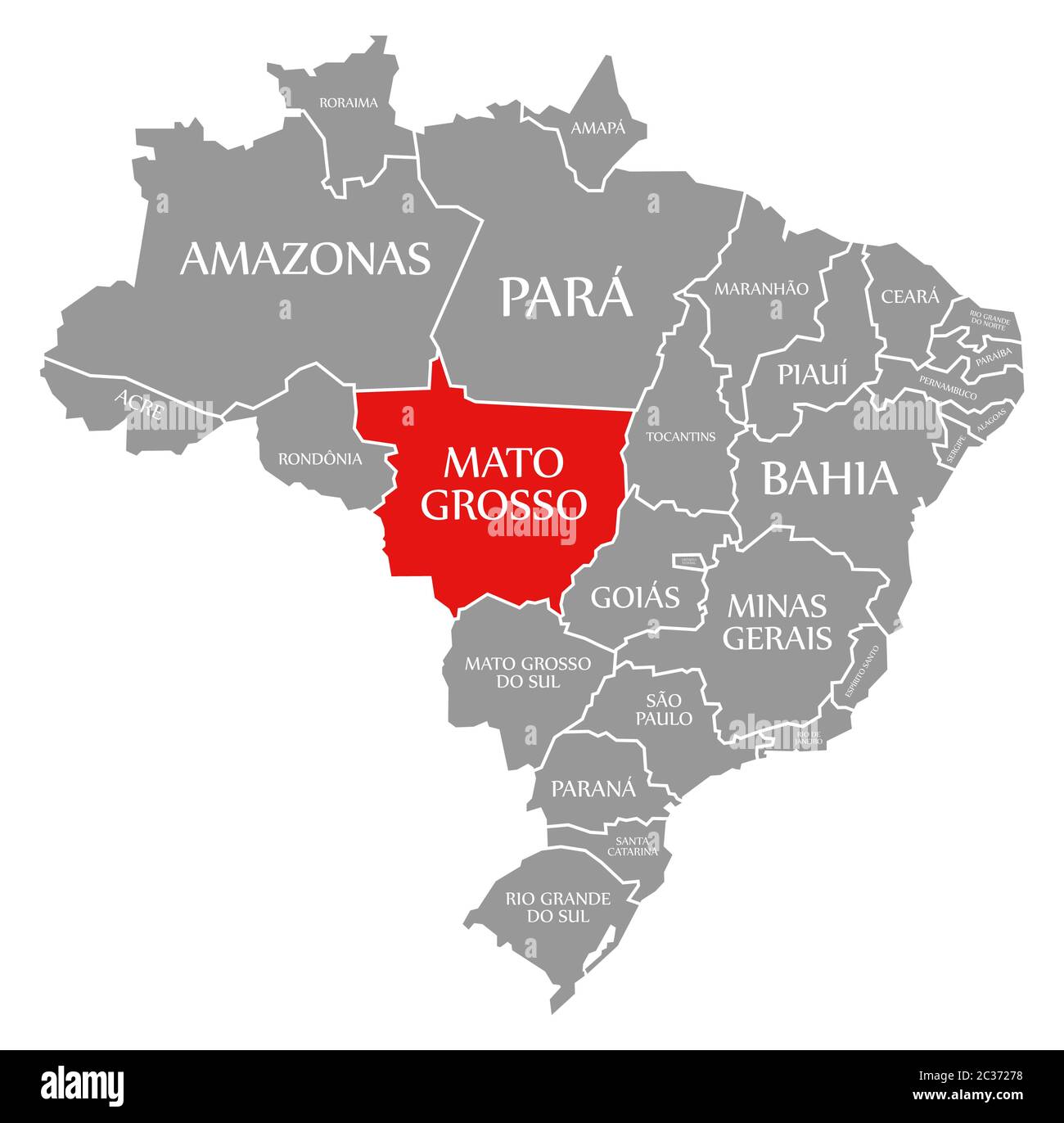
Let's focus our attention on #1 soybean producer Mato Grosso
https://www.alamy.com/mato-grosso-red-highlighted-in-map-of-brazil-image363417132.html
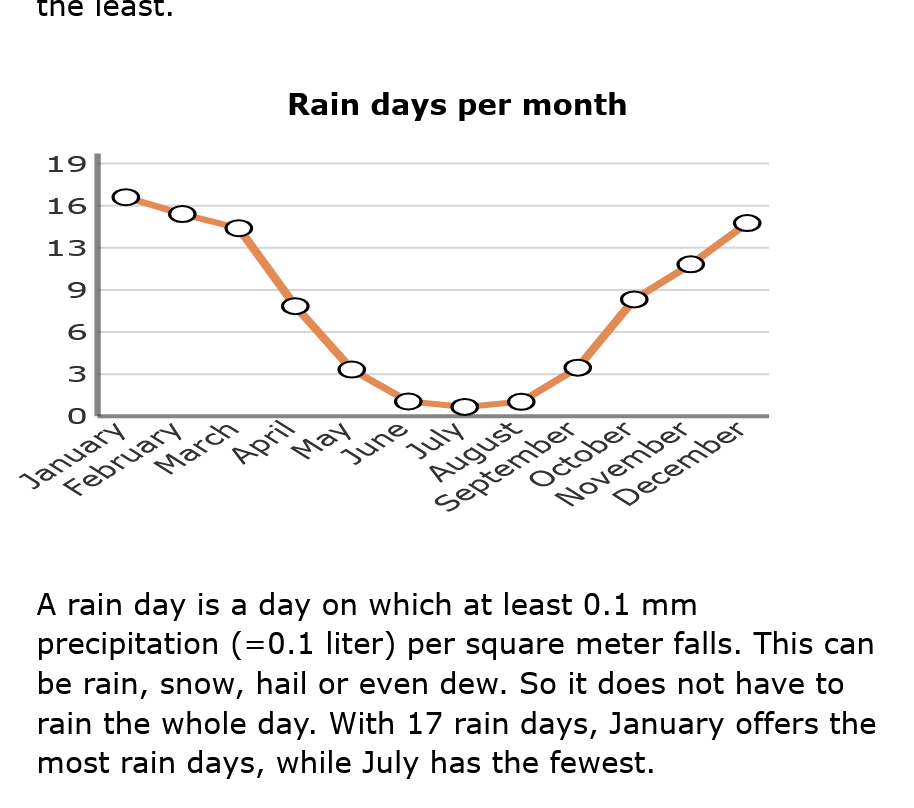
This city below is very close to the epicenter of soybean production: We should note that the rainy season/monsoon there is sometimes already starting here in October. However, things really get wet in November as the average 9+ inches of rain. Those heavy rains continue in D-J-F-M, then the dry season begins and lasts for 6 months.
The soils in Brazil can't hold moisture like our soils, so 9-12 inches/month is great not excessive.
Also, the latitude of Sinop is 11 degrees South. Compare that to Miami, Fl which is 26 degrees North. (Des Moines is around 41 degrees North).
This means that the intensity of the sun is BRUTAL all growing season. Great to use especially powerful solar radiation for photosynthesis, extremely bad in a drought that dries out and BAKES the soils which already struggle to hold moisture.
Sinop This city has a tropical climate. In Sinop, the quantity of rainfall during summers surpasses that of winters. The climate is classified as Aw according to Köppen and Geiger. The average annual temperature in Sinop is 25.4 °C | 77.6 °F. The annual rainfall is 1801 mm | 70.9 inch.

Click one of the graphs for more information.
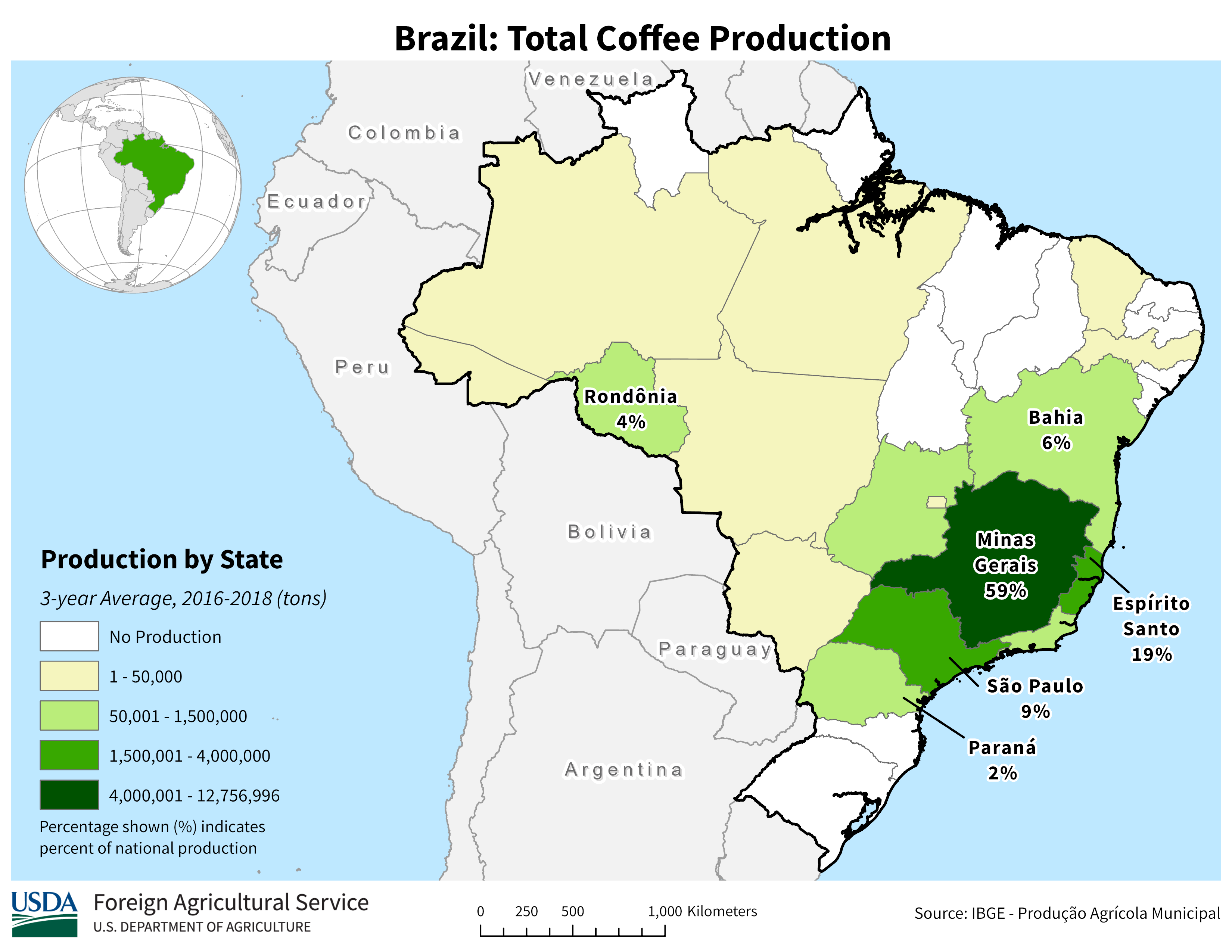
USE THESE MAPS FOR THE COFFEE FORECAST TOO(which looks pretty good, although northern parts may see dryness develop.
https://ipad.fas.usda.gov/rssiws/al/crop_production_maps/Brazil/Municipality/Brazil_Total_Coffee.png
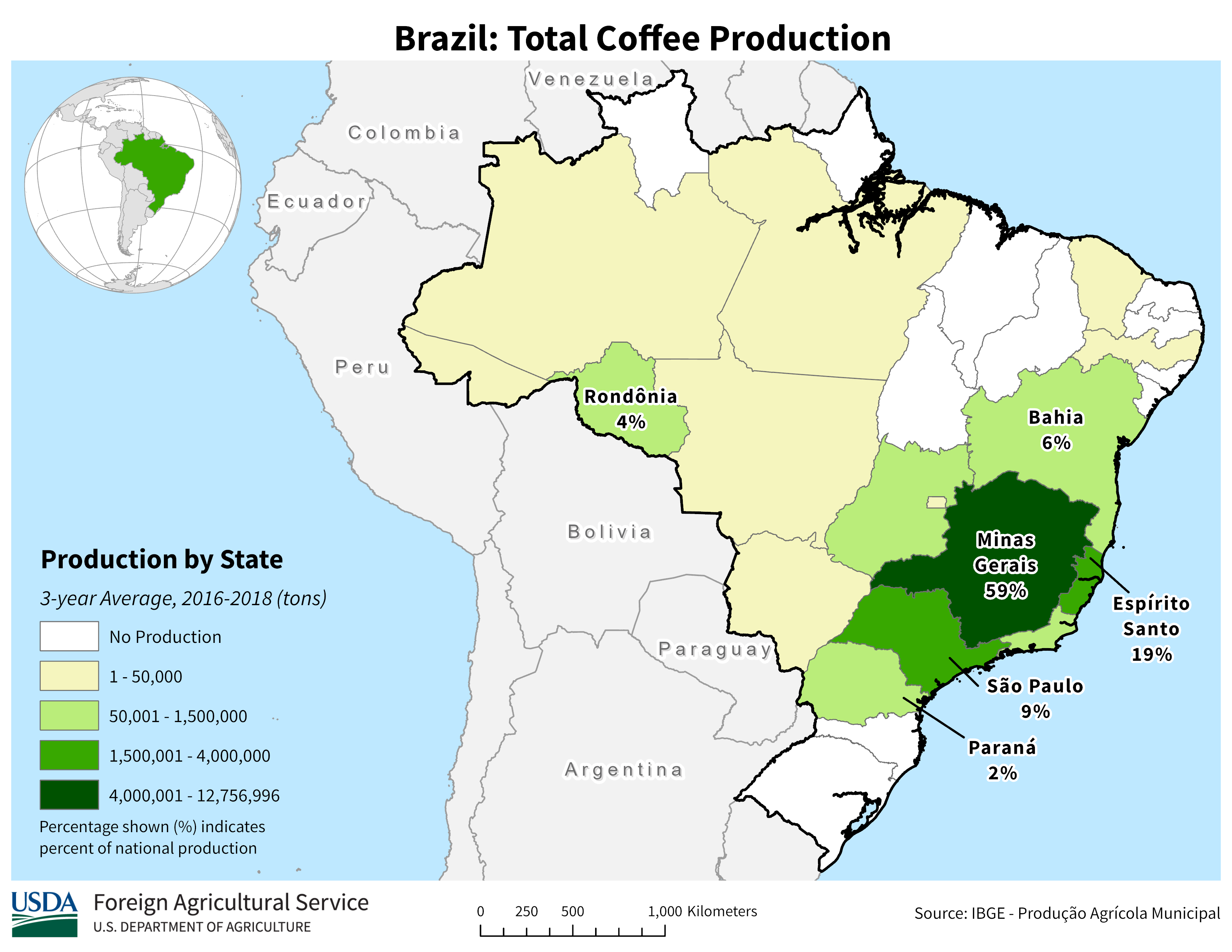
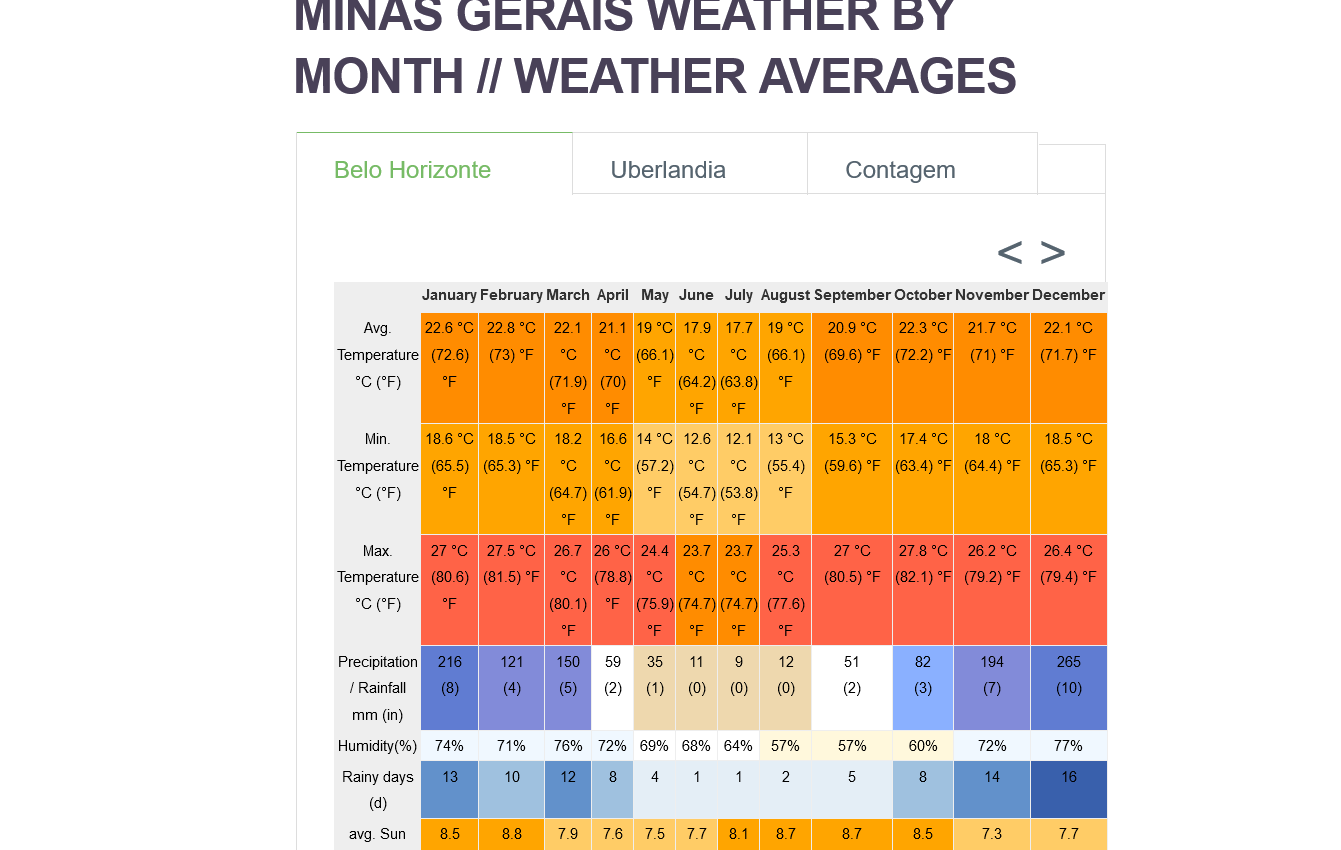
Their wet season usually starts in October then really picks up in November. December/January are the wettest months, with nearly 12 inches/month!!! Then rains taper off in February and March. Followed by 6 months of dry weather.
Extremely similar to Mato Grosso to the west!!!
https://en.climate-data.org/south-america/brazil/minas-gerais/uberaba-2878/#climate-graph
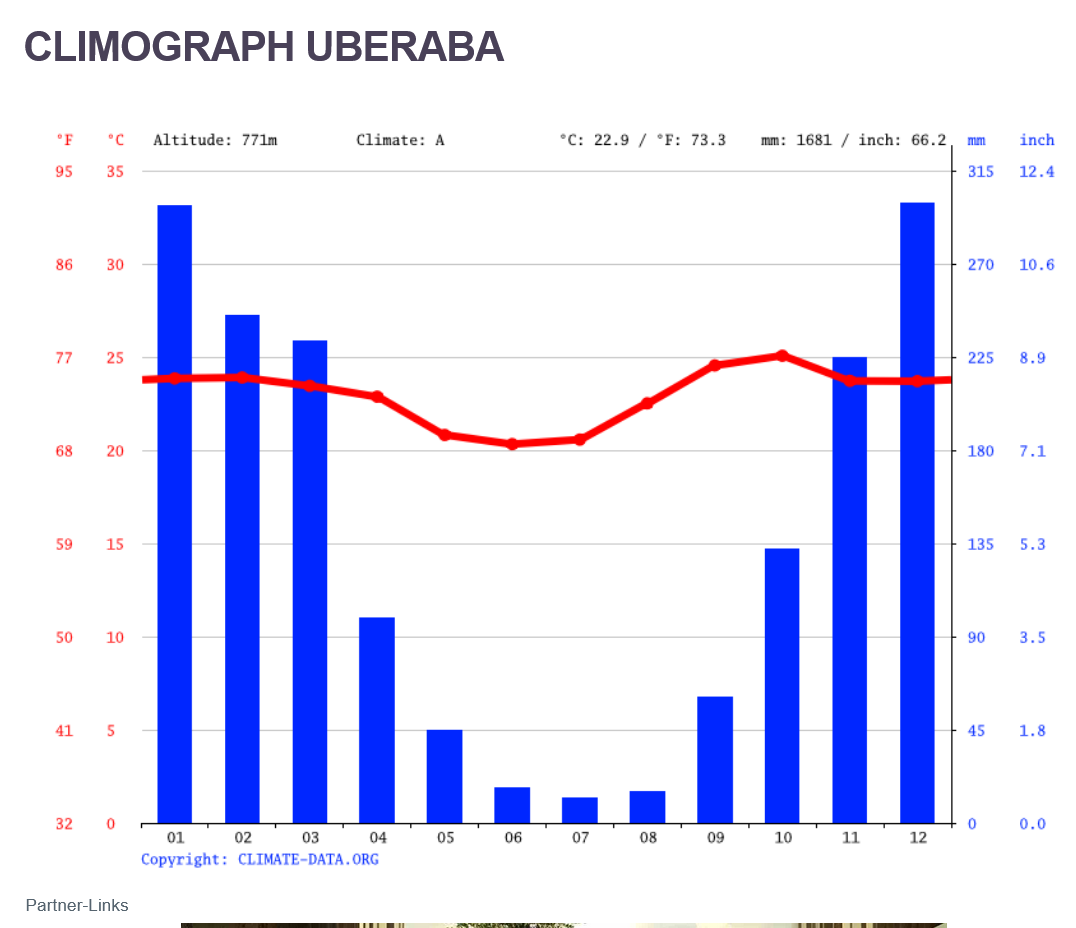
https://en.climate-data.org/south-america/brazil/minas-gerais-203/r/february-2/#monthly-weather-data