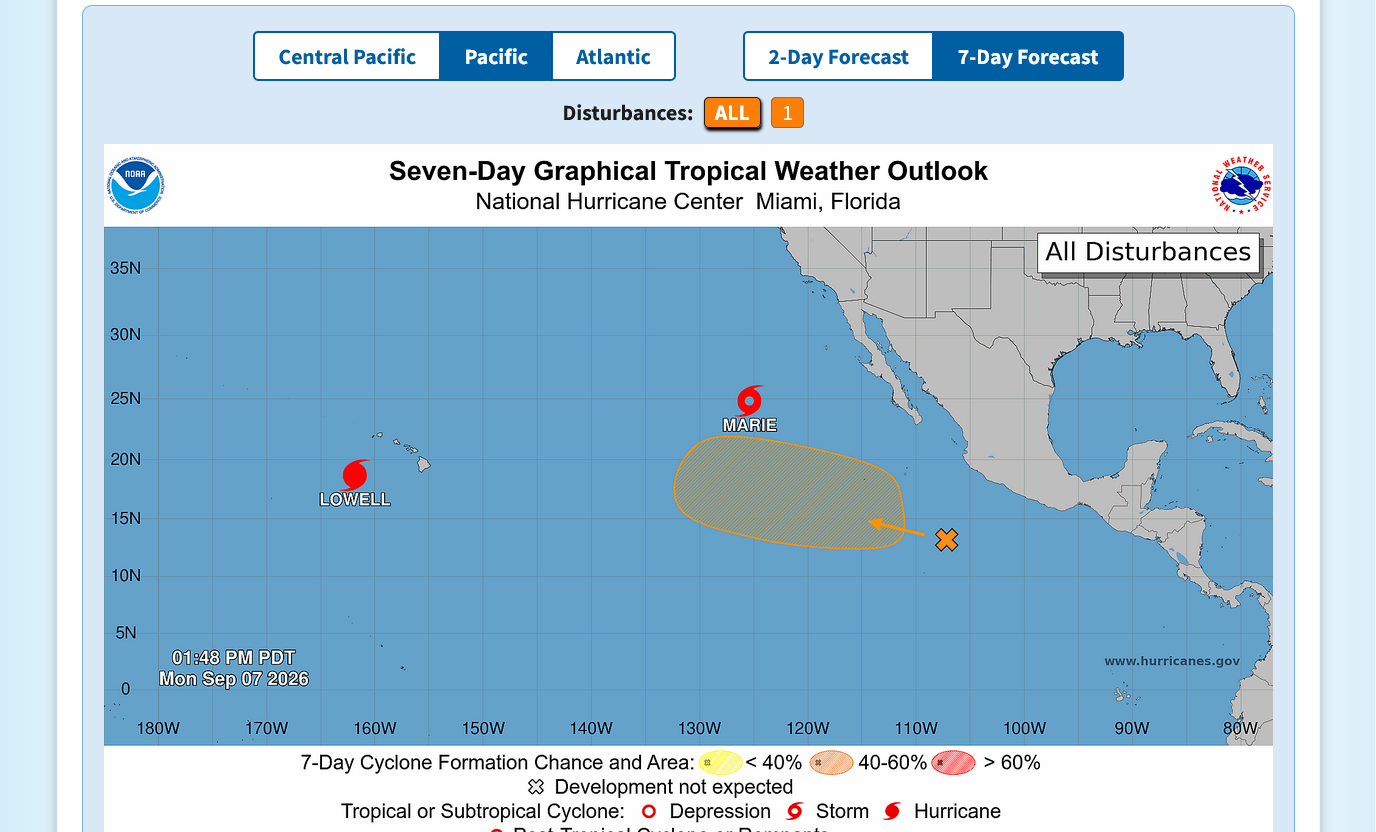
Tracking just west of Hawaii!
https://www.nhc.noaa.gov/refresh/graphics_cp4+shtml/072048.shtml?cone#contents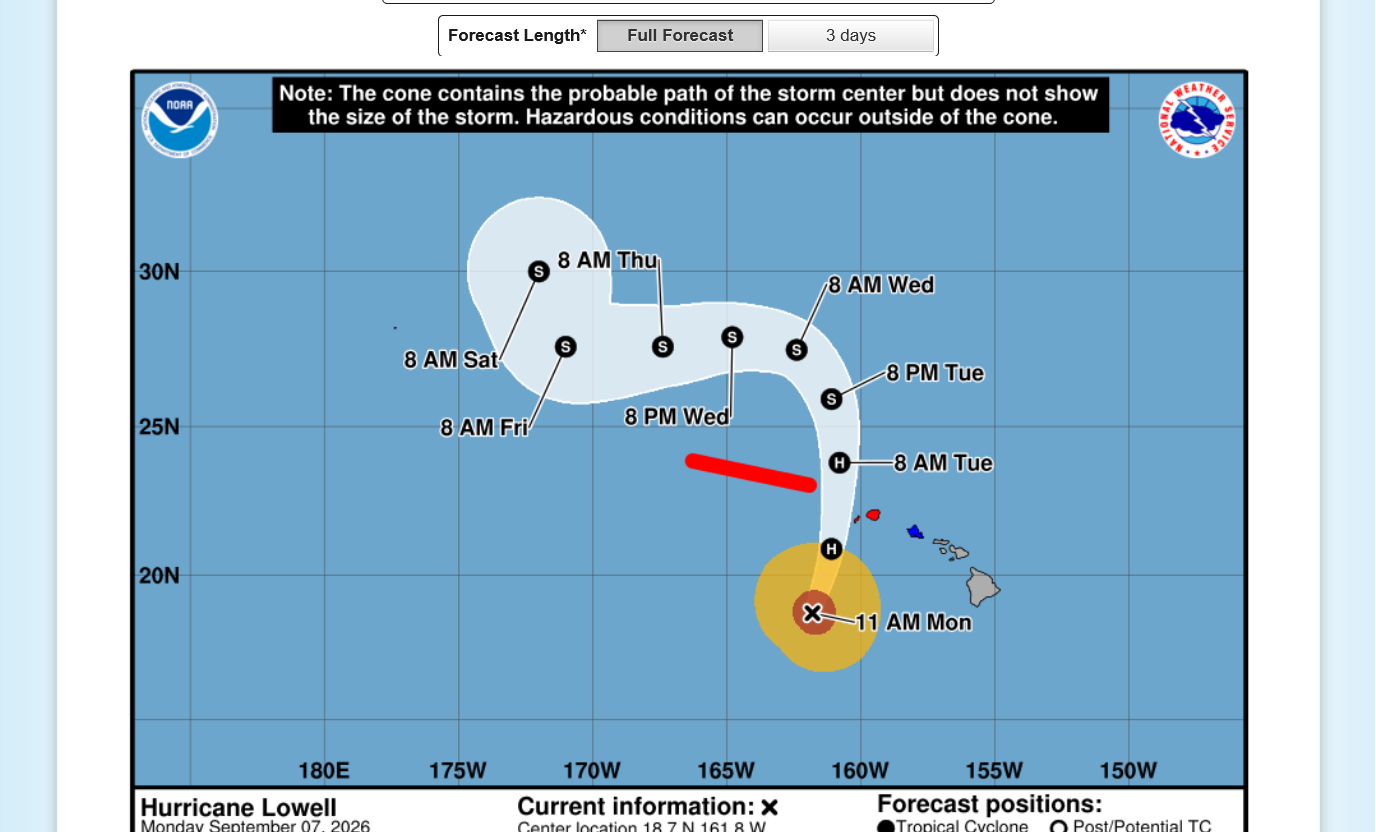
Discussion below:
https://www.nhc.noaa.gov/text/refresh/HFOTCDCP4+shtml/072048.shtml?
https://en.wikipedia.org/wiki/2026_Pacific_hurricane_season
AI Overview
++++++++++++++
https://en.wikipedia.org/wiki/2026_Atlantic_hurricane_season
+++++++++++


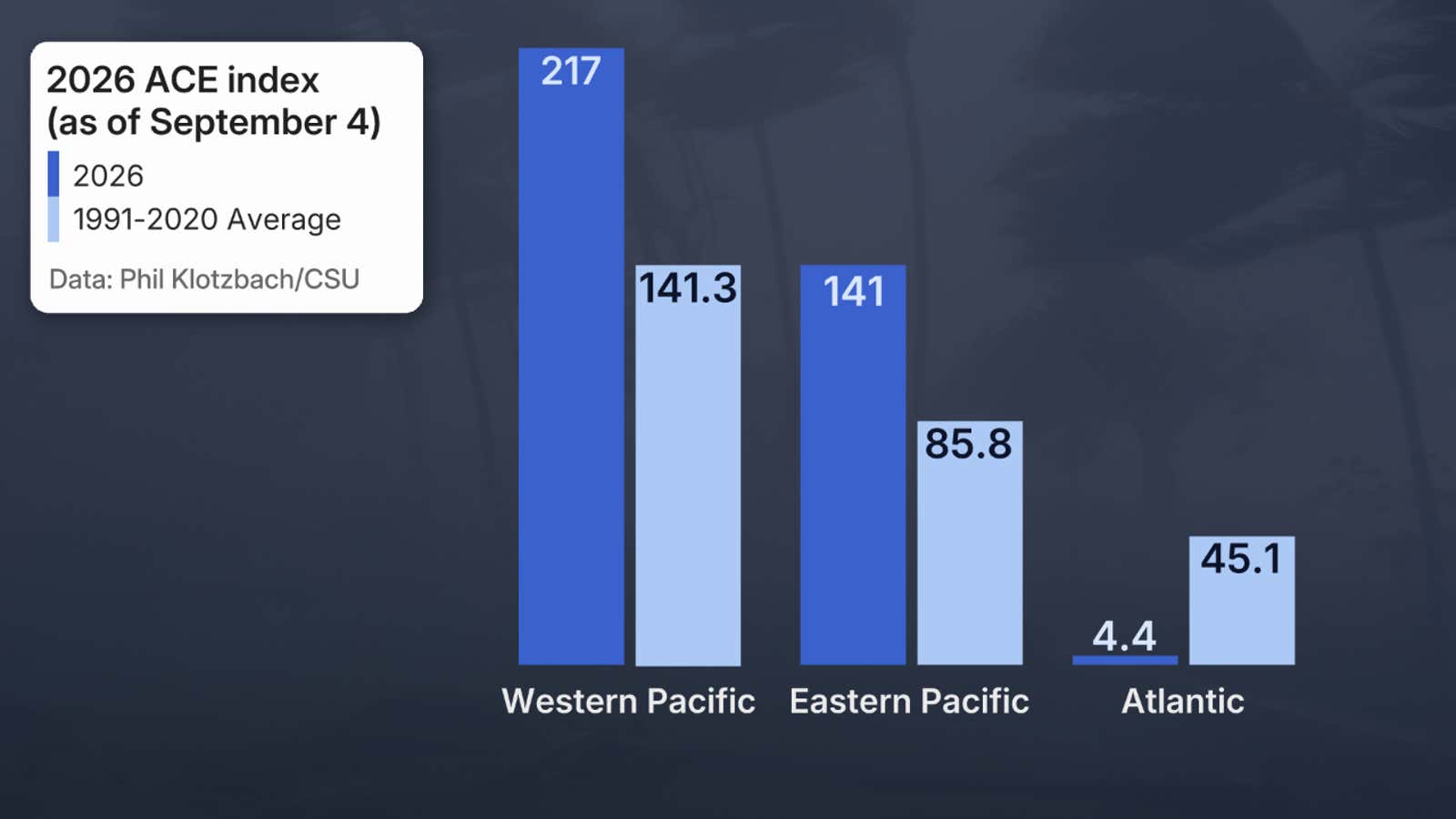
Accumulated Cyclone Energy, or ACE, is a metric that measures the total energy produced by tropical storms and hurricanes over a given period, accounting for both how strong they were and how long they lasted.
It's another measure meteorologists use to gauge how active a hurricane season has been.
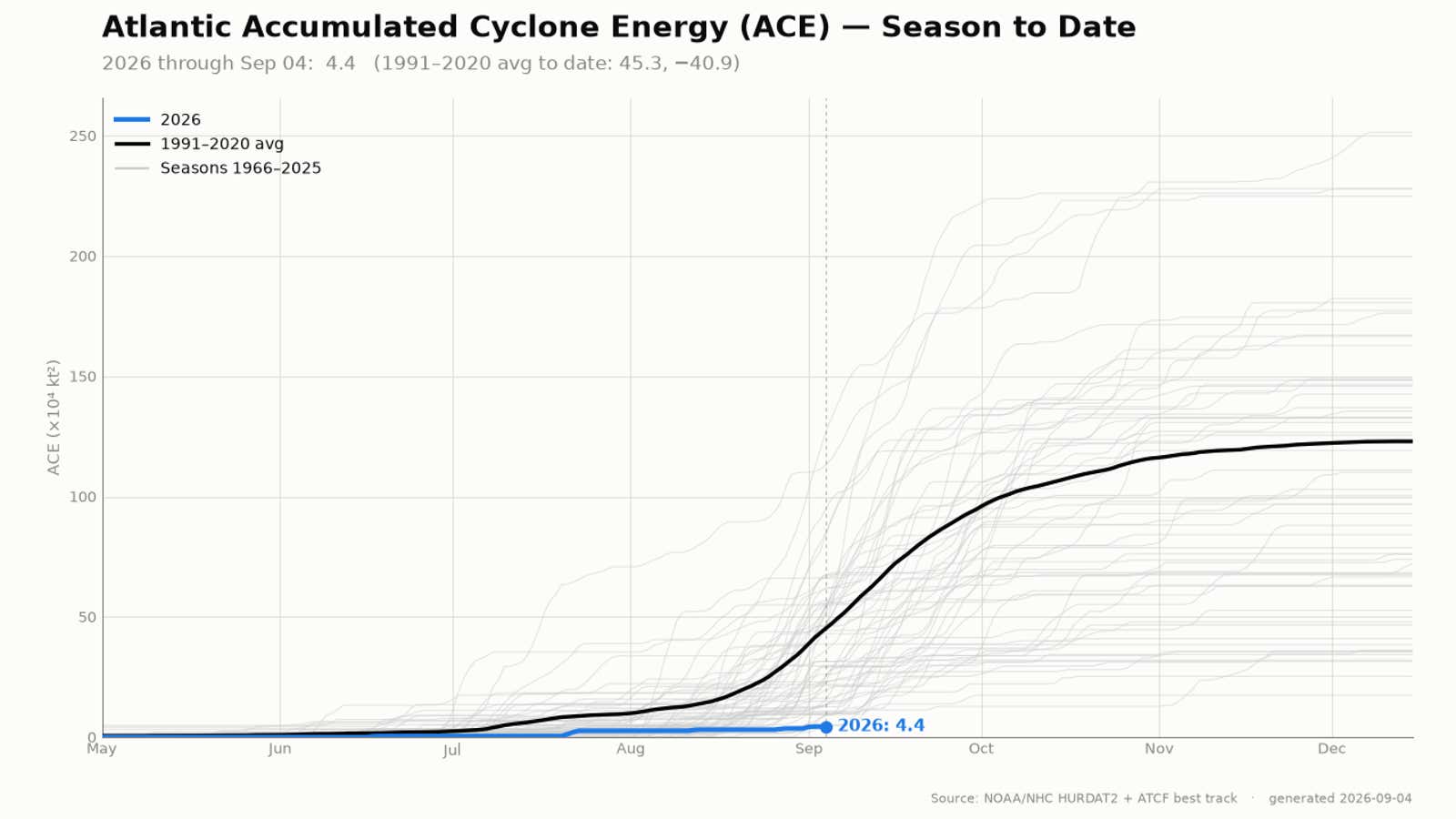
Weakest season on record for the Atlantic! WOW! El Nino wind shear is suppressing Atlantic storms!
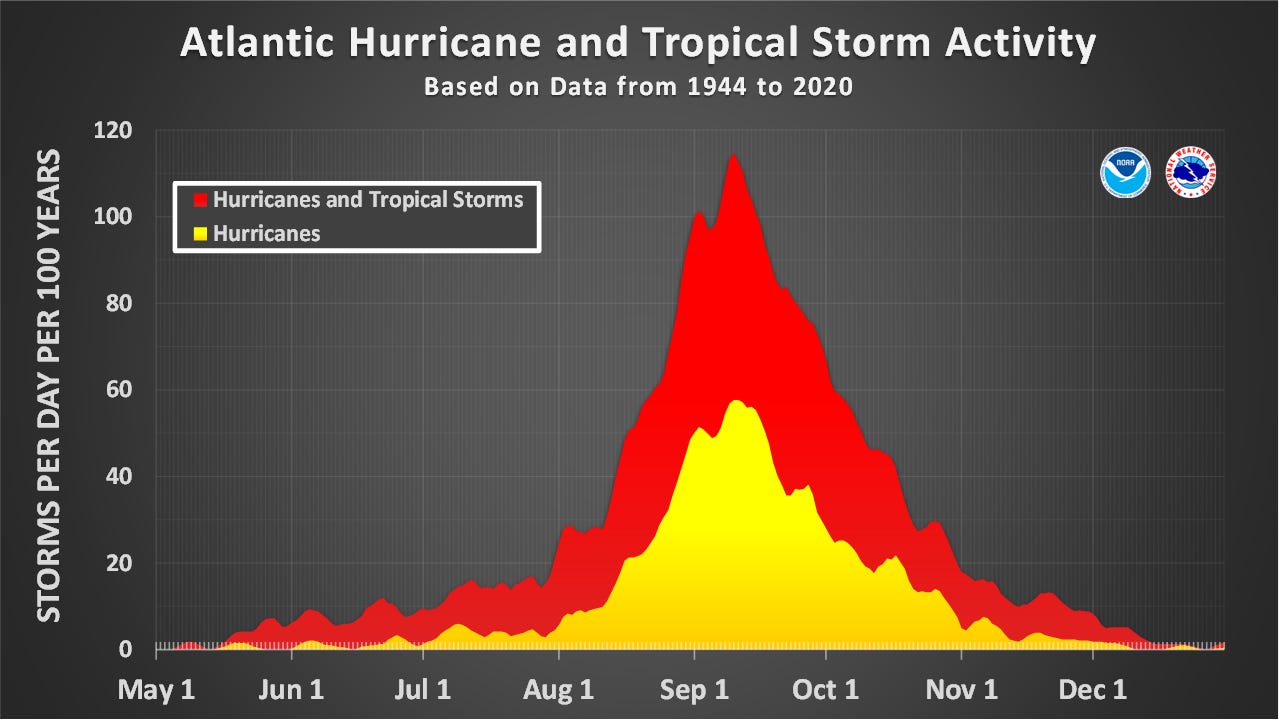
September is typically the most active month of the season.
That's because sea surface temperatures are at their warmest and atmospheric conditions are the most favorable for tropical development.
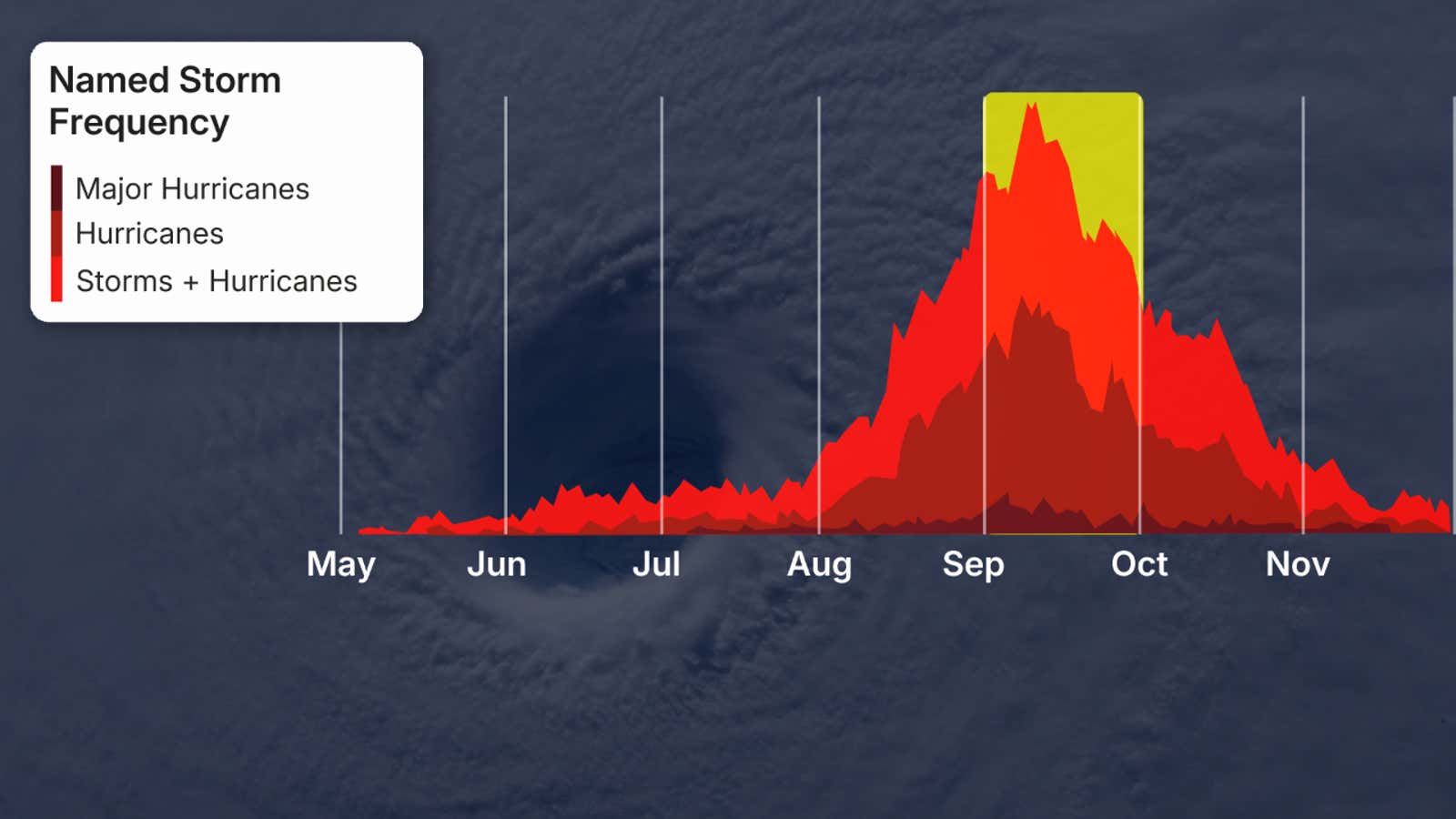
This graph shows the average storm, hurricane and major hurricane tallies from 1944 through 2020 in the Atlantic Basin. The yellow area highlights an average September.
(Data: NOAA/NHC)
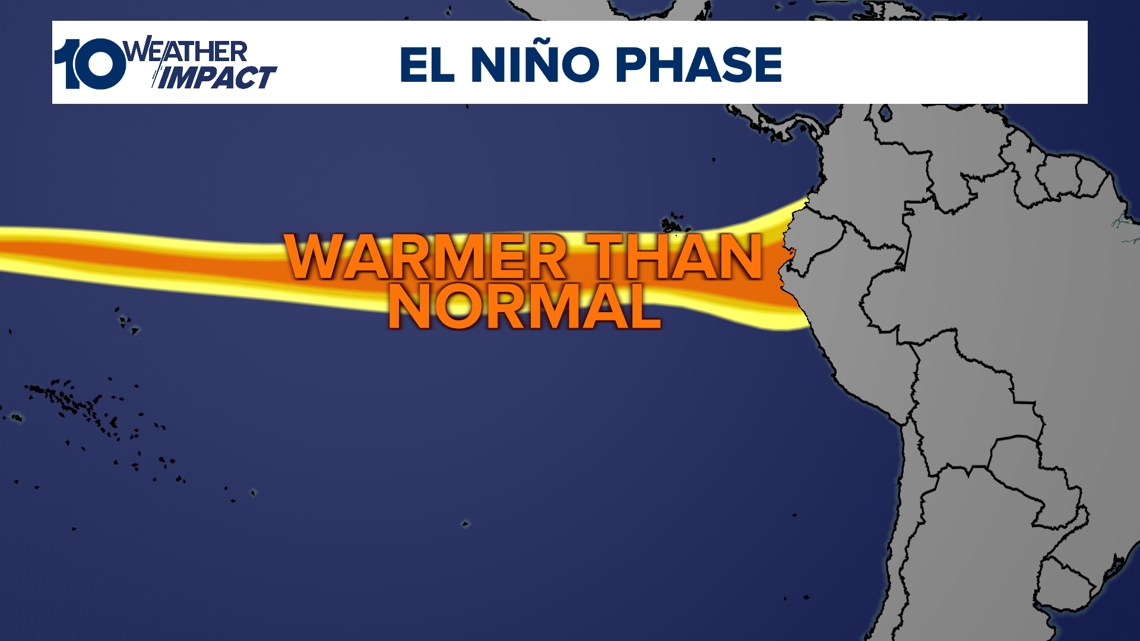
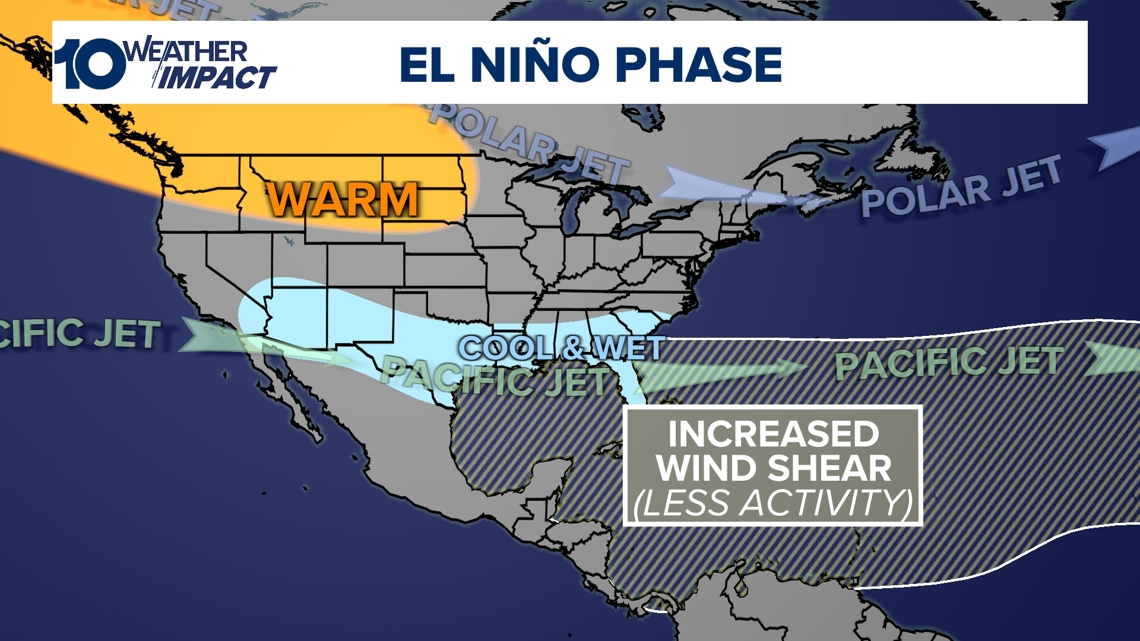
The intensifying El Niño has been the largest contributor to the way this hurricane season has unfolded.
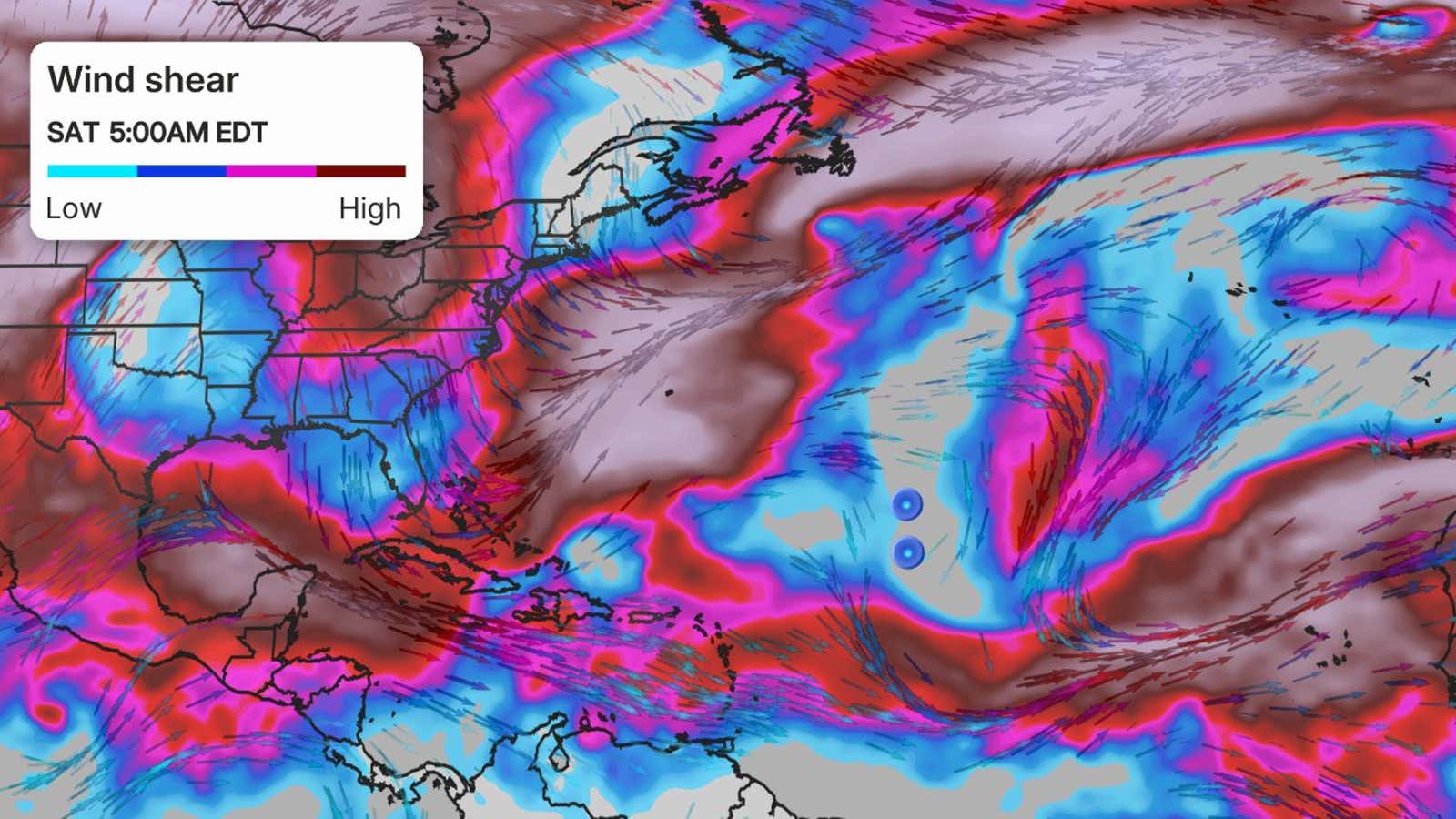
Stronger El Niños typically increase wind shear, or changes in wind speed and direction, in the Atlantic Basin. This increase in wind shear can shred storms before they even develop, or weaken ones that do.
Wind shear since July from the Caribbean Sea to just off the west coast of Africa has been the strongest on record for that time of year since 1979, according to Colorado State University tropical scientist Phil Klotzbach.
It was this wind shear and dry air that spelled the quick demise of Tropical Storm Dolly in late August and has squashed other tropical waves moving westward off Africa that often give rise to storms and hurricanes this time of year.
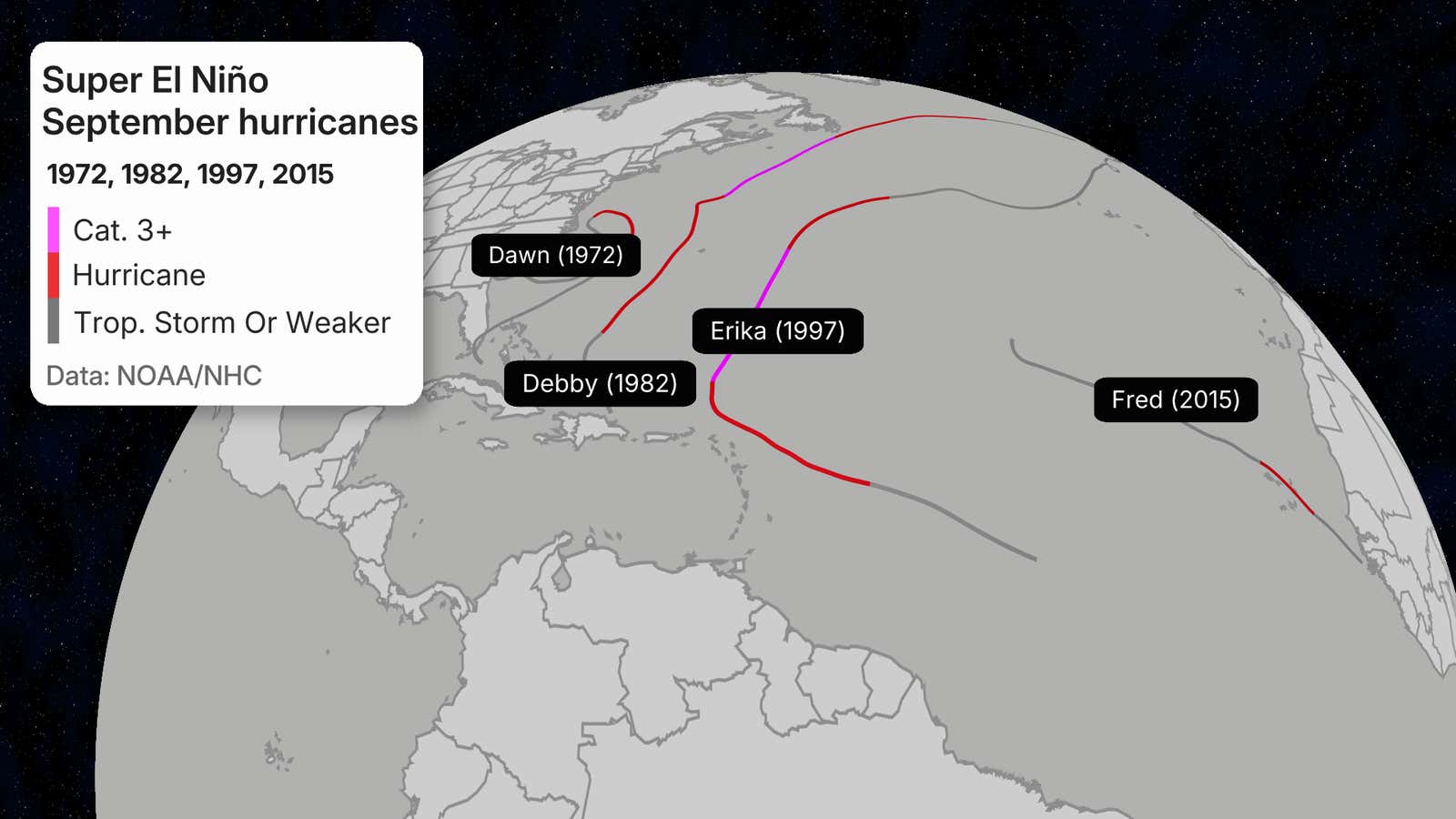
That will likely continue. The map below shows all September hurricanes during super El Niño years.
(MORE: Your guide for everything El Niño)
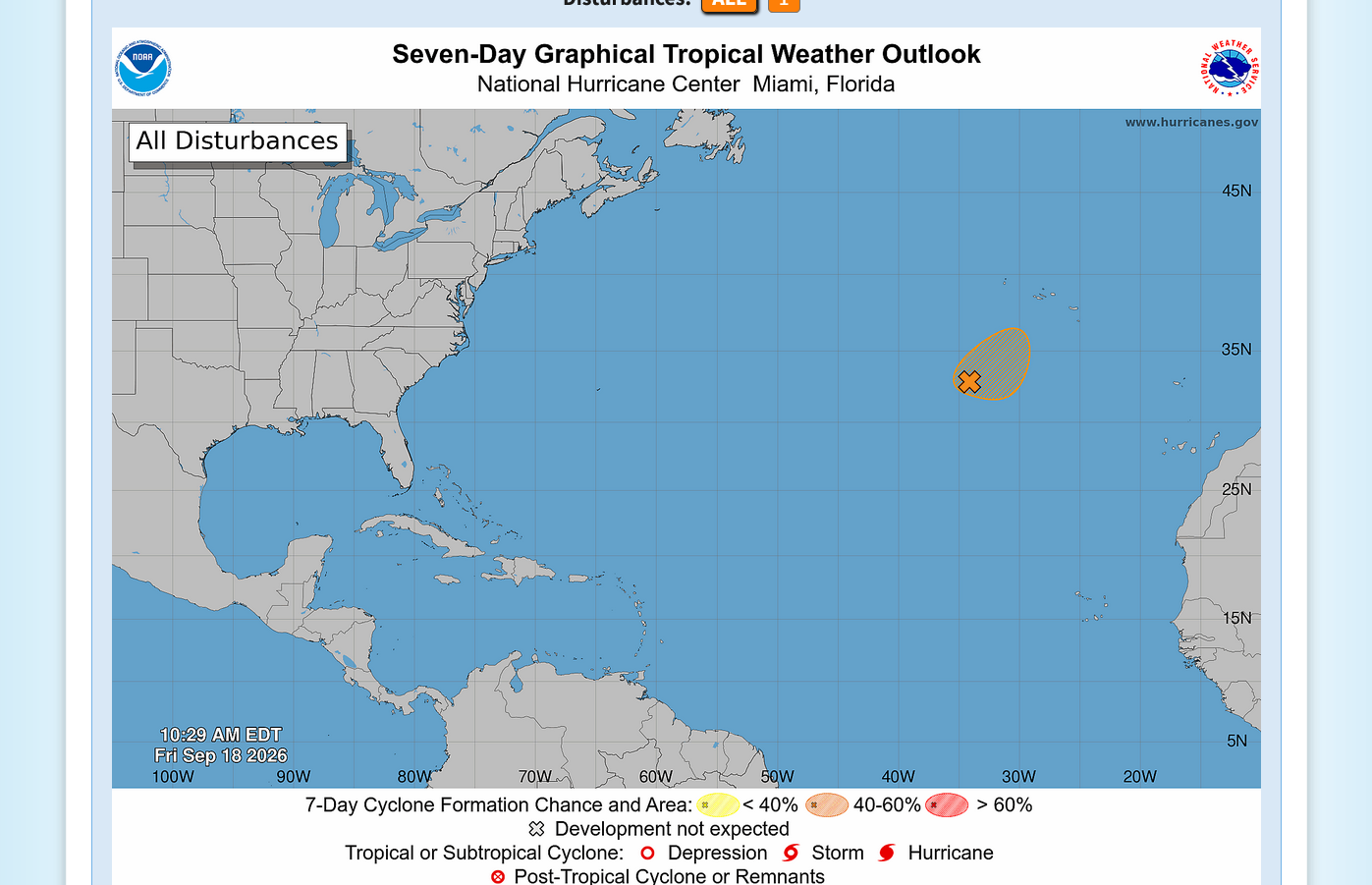
September 12 is the midpoint of the season & there's nothing on the 7 day map.
From Colorado State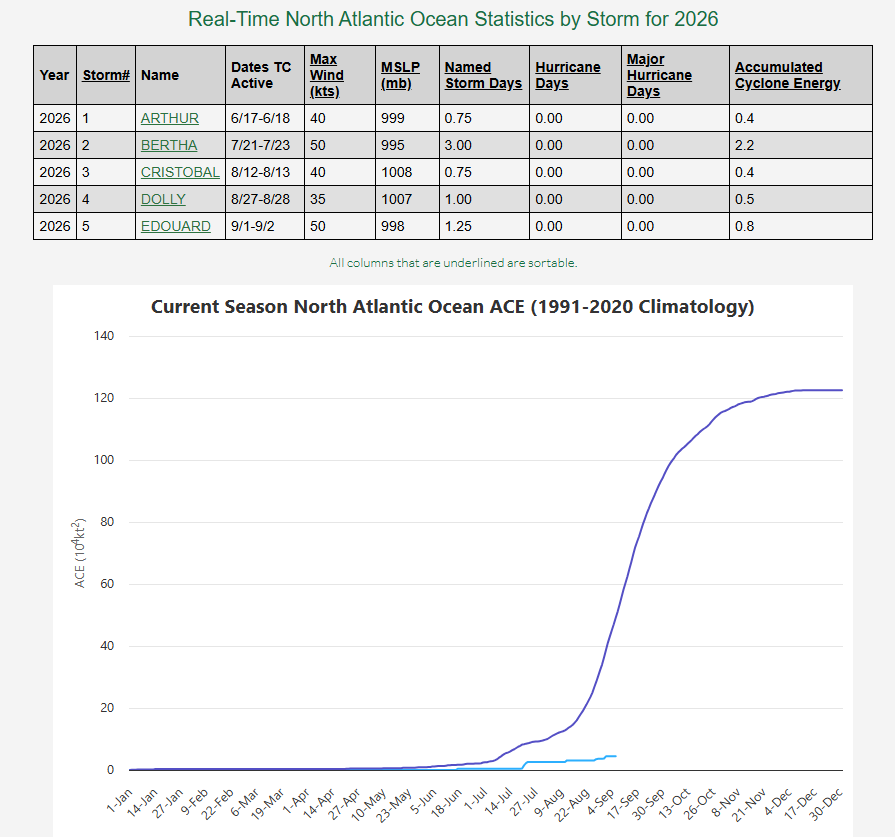
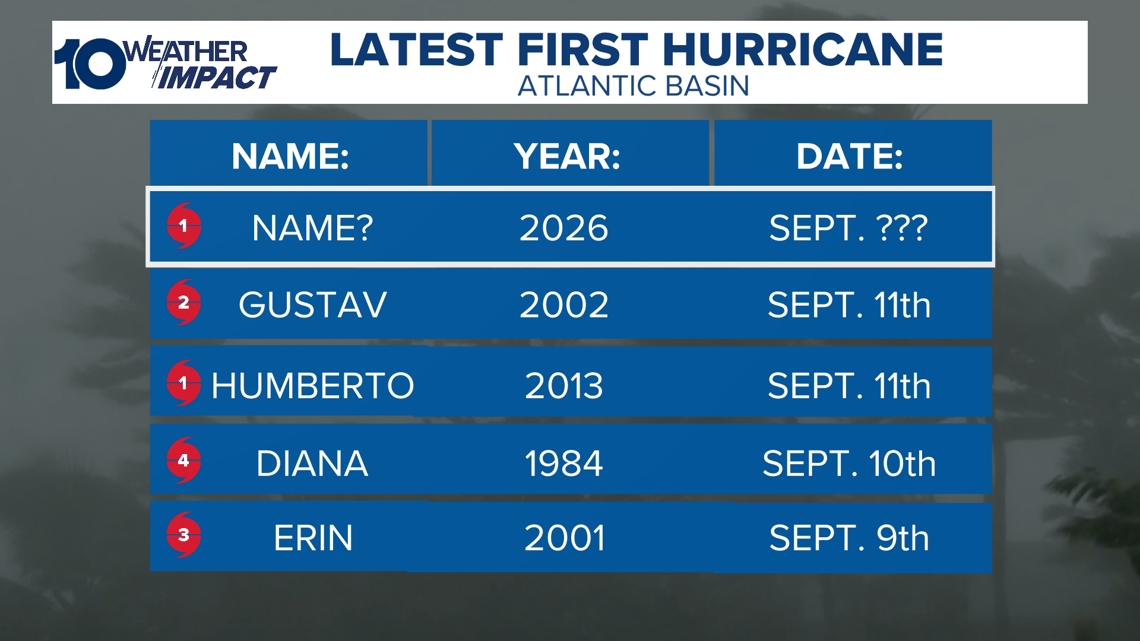
We're obliterating the record for latest first hurricane in the Atlantic basin.
Today is September 18, 2026, 7 days past the old record..............and counting!!!!
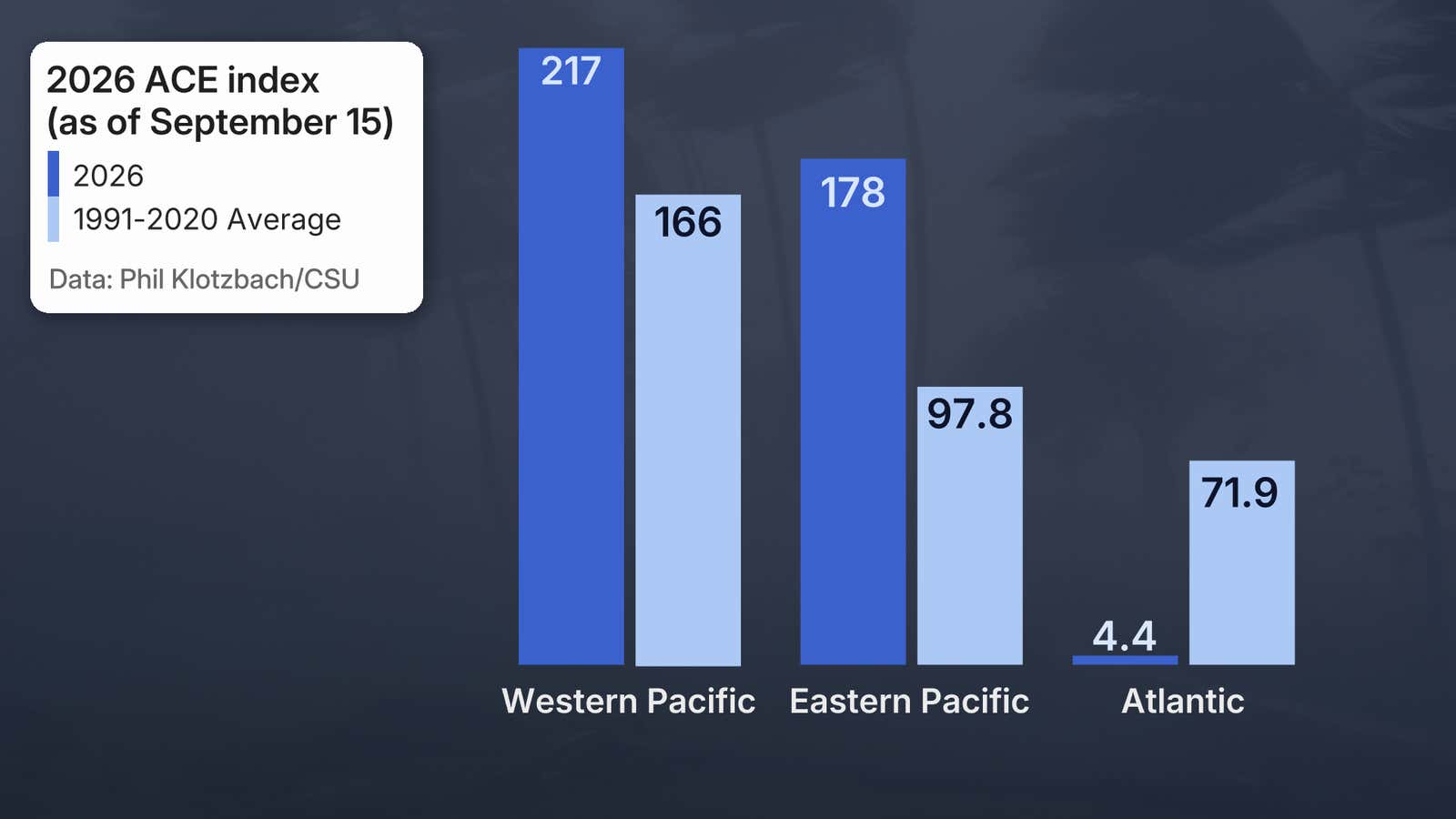
Tropical activity in the Atlantic has been quiet so far this season, hitting a record low.
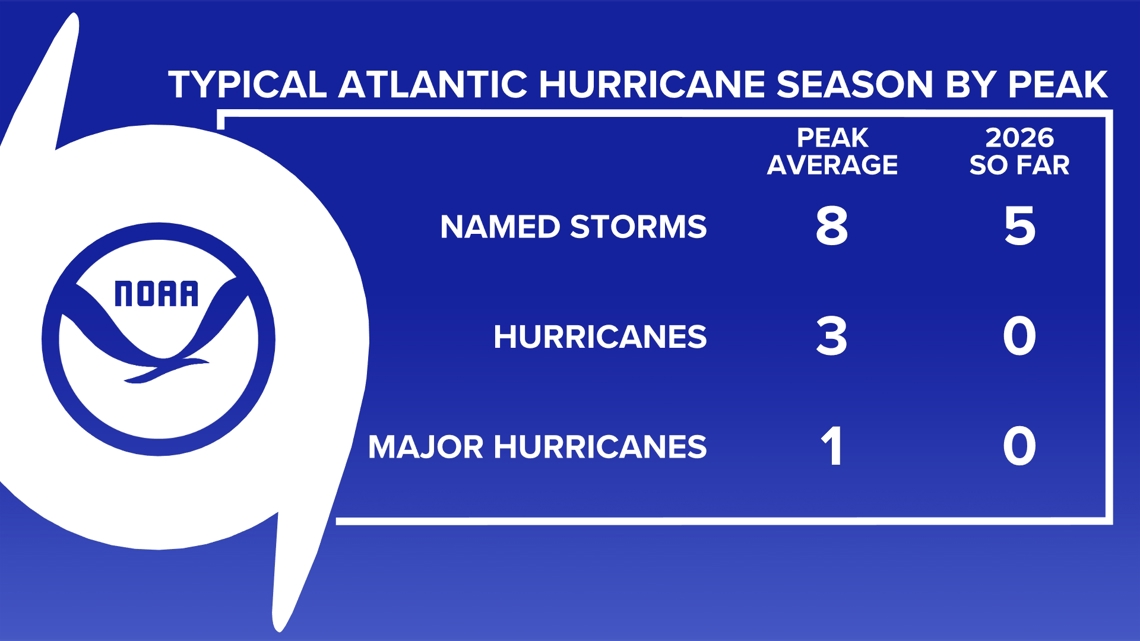
Here's the reason:
https://balancedweather.substack.com/p/climatological-peak-of-atlantic-hurricane
We are past the peak but hurricanes can still develop, even major ones! None in the forecast right now!
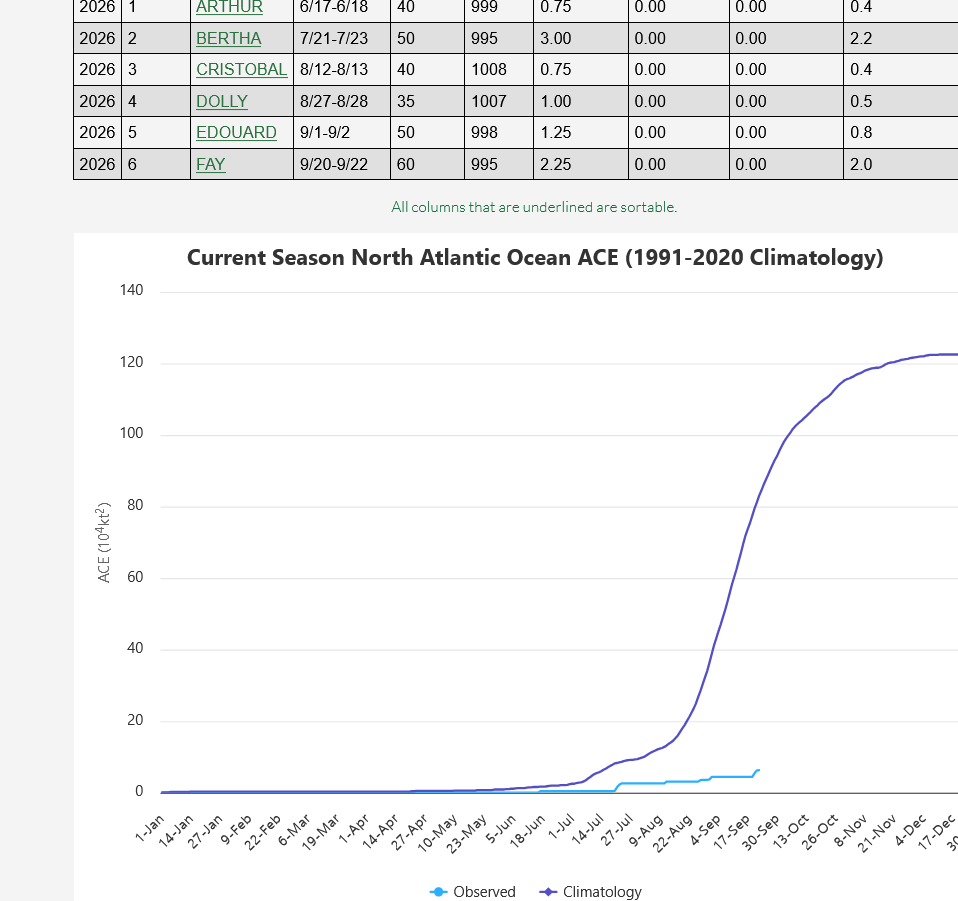
The Atlantic ACE is mind boggling low right now!!!
Tropical systems require very light winds aloft to develop (the complete opposite as mid latitude storms). They feed on very warm, humid water that evaporates into the air at the surface, condenses as it rises, which creates energy. NOT from a strong jet stream that lifts the air from the bottom up that we see in the mid-latitude cyclones.
Even a weak jet stream in the tropics will tear apart the favorable, vertical profile needed for hurricanes.
The Atlantic has never gone this late without a hurricane since modern satellite tracking began in 1966.

In 1905, we had no satellite images to see hurricanes in the Atlantic Ocean. There were plenty of hurricanes before satellites and especially before Hurricane Hunters in the middle of the Atlantic but no ships could have tracked into a storm like this. And humans had just started learning how to fly.
+++++++++++
Hurricane Hunters
https://en.wikipedia.org/wiki/Hurricane_hunters
The first crewed flight into a hurricane happened in 1943 when a pilot-trainer flew into a Category 1 hurricane near Galveston, Texas on a bet.
++++++++++++
https://tropical.atmos.colostate.edu/Realtime/index.php?loc=northatlantic
 ++++++++++++++
AI Overview
+++++++++++++++++
Keep in mind, again that in 1914 there were probably some tropical storms in the Atlantic Basin that we lacked the technology to detect. This last tropical storm in 2026, Fay for instance would not have been known in 1914.
Fay hit 70 mph a couple of days ago, way out in the Atlantic, just shy of a hurricane!
https://en.wikipedia.org/wiki/2026_Atlantic_hurricane_season

Hurricane Categories (Saffir-Simpson Scale)
Hurricanes are ranked from Category 1 to Category 5 based on their wind speeds: [1]
Hurricane Polo, in the Pacific is at 165 mph right now!!!
https://www.nhc.noaa.gov/refresh/graphics_ep2+shtml/230250.shtml?key_messages#contents
https://www.nhc.noaa.gov/refresh/graphics_ep2+shtml/230250.shtml?cone#contents

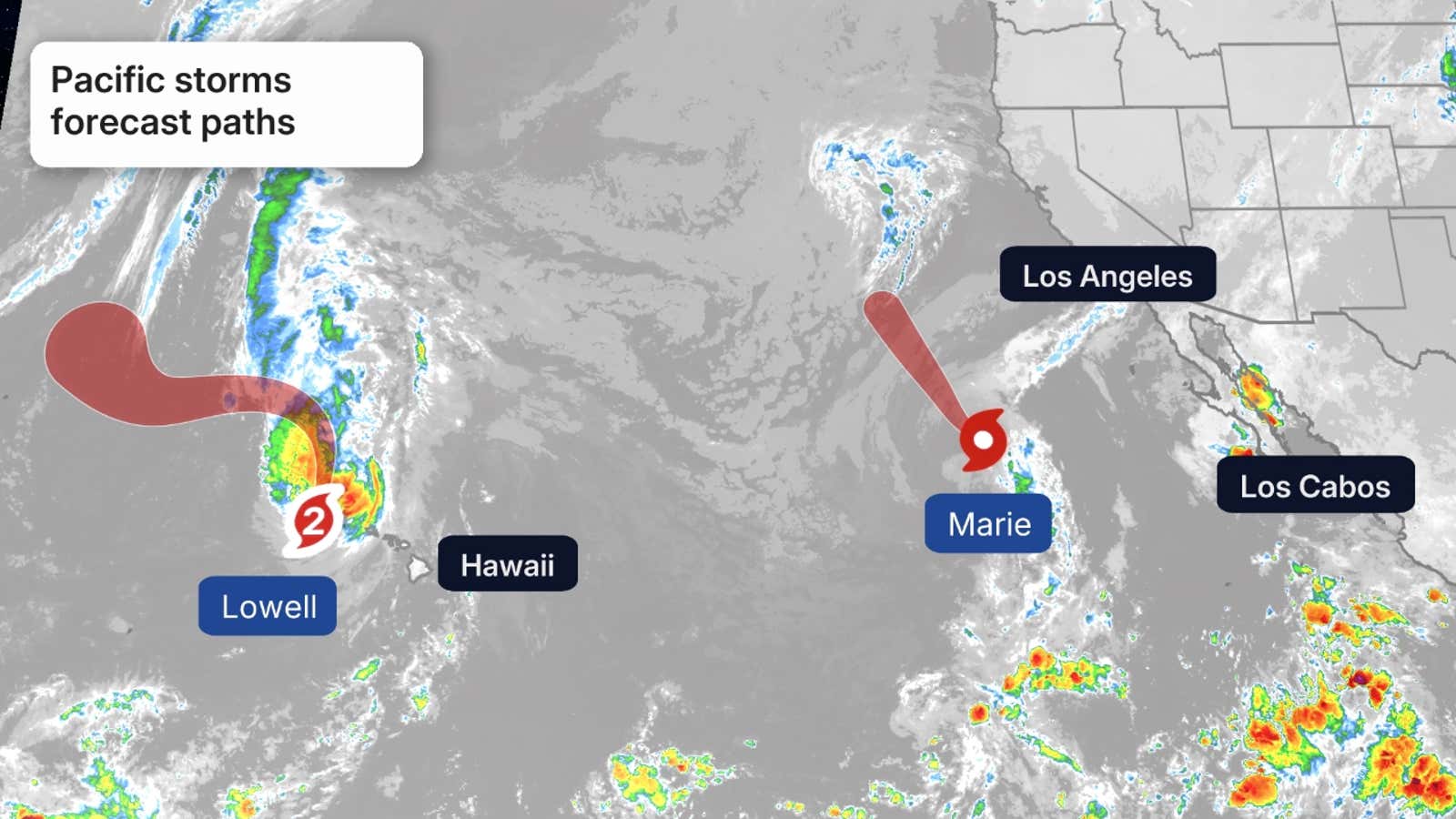
Hawaii has already had a very rough season with 3 TCs affecting it so far this season. And now check this out:
TD 15E had formed in the E PAC back on Sep 13th from an AEW that had moved off of Africa way back on Aug 27th. This was actually the very next wave after the one that produced Dolly in the Atlantic! This then degenerated in the E PAC into an open wave late on Sep 15th.
But one week later (late last night), this reorganized back to TD 15E 405 miles SSE of Hilo, Hawaii, moving WNW. It’s forecasted to become a TS later today and then turn sharply N tonight. It is then forecasted to become a H tomorrow night and reach high end cat 2 H status Fri night while not too far S of the big island of Hawaii meaning a potential serious threat there then:
From the NHC discussion:
The depression is moving west-northwestward at about 10 kt on the
southwest side of a low- to mid-level ridge. This ridge is expected
to shift eastward and weaken while a mid- to upper-level low dives
southwestward near the northwestern Hawaiian Islands. This pattern
change should cause the cyclone to slow down and then turn northward
or north-northeastward later this week. That motion should take the
cyclone near the Big Island of Hawaii late Friday or on Saturday.
Around that time, the upper low is expected to weaken and move
westward, allowing mid-level ridging to become re-established to the
north of the system. In response, the cyclone should turn and then
accelerate westward.
FORECAST POSITIONS AND MAX WINDS
INIT 23/0900Z 14.0N 153.7W 30 KT 35 MPH
12H 23/1800Z 14.4N 154.7W 35 KT 40 MPH
24H 24/0600Z 14.6N 155.5W 45 KT 50 MPH
36H 24/1800Z 15.0N 155.6W 55 KT 65 MPH
48H 25/0600Z 15.9N 155.2W 70 KT 80 MPH
60H 25/1800Z 17.0N 154.9W 85 KT 100 MPH
72H 26/0600Z 17.9N 154.7W 95 KT 110 MPH
96H 27/0600Z 18.3N 156.0W 95 KT 110 MPH
120H 28/0600Z 18.2N 159.0W 95 KT 110 MPH
Fascinating, Larry!
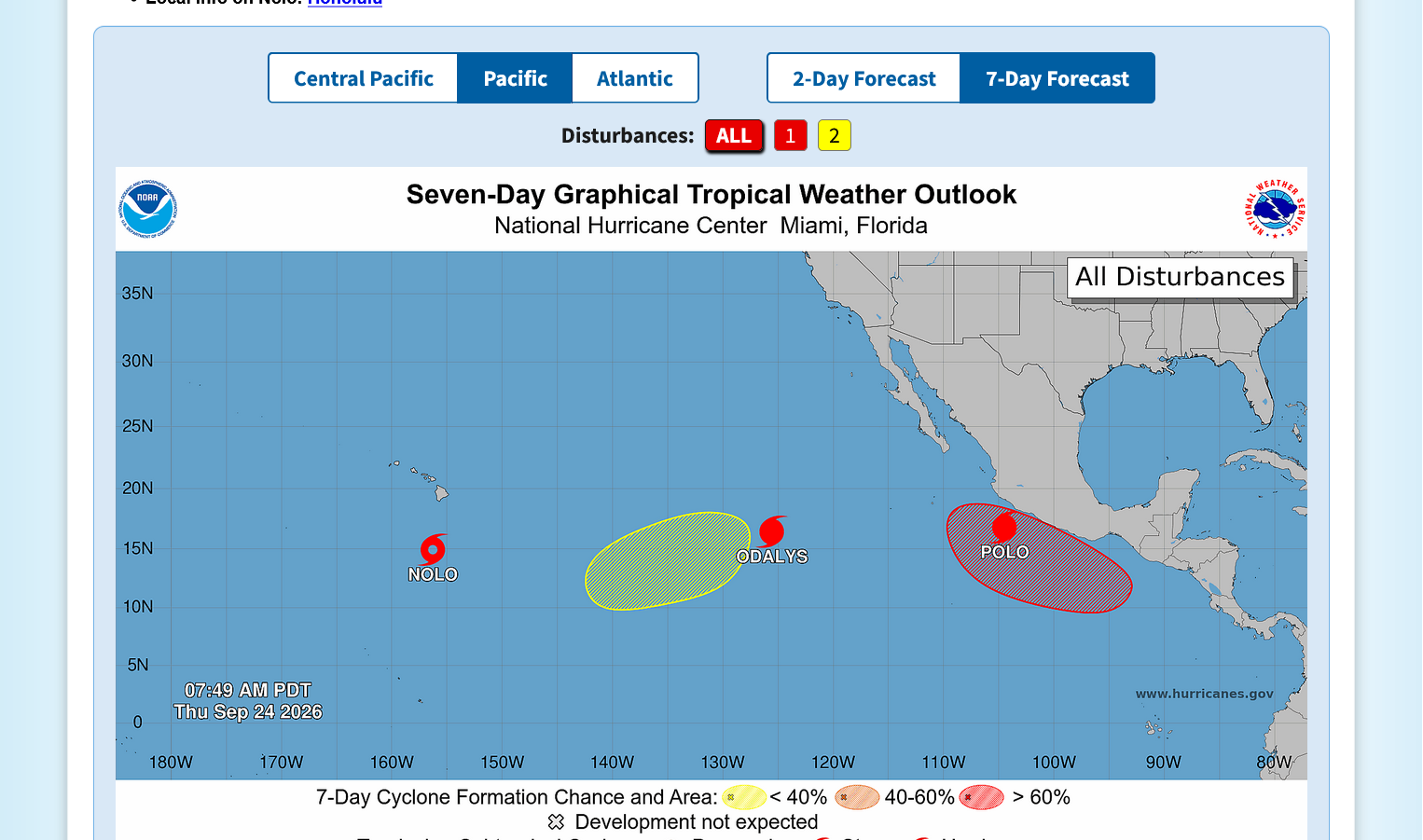
TS Nolo is about to become a hurricane, then strengthen to a major hurricane and pass just south of the big island on Saturday. More shortly.
++++++++
https://www.nhc.noaa.gov/refresh/graphics_cp2+shtml/241449.shtml?cone#contents
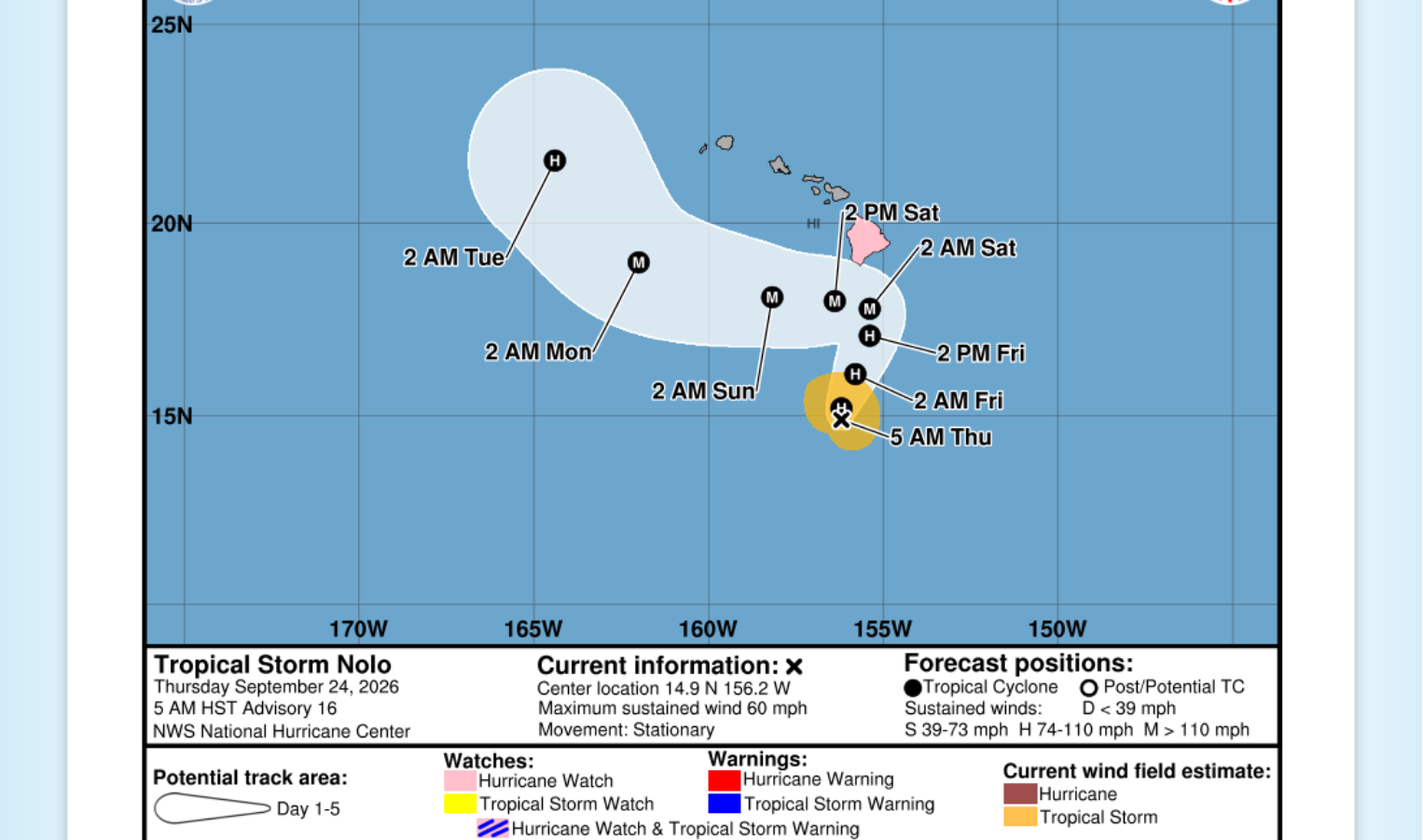
Discussion: Peaking at 120 mph. M, above means Major hurricane, which starts at 120 mph.
https://www.nhc.noaa.gov/text/refresh/HFOTCDCP2+shtml/241450.shtml?
https://www.foxweather.com/weather-news/atlantic-hurricane-drought-near-historic-milestone
+++++++++++++++++
No sign of a hurricane the next week!
Hurricane Polo is about to landfall on the C Baja California Peninsula!
Thank you, Larry!
Hurricane party time in the Pacific!
https://www.nhc.noaa.gov/text/refresh/MIATCDEP2+shtml/290234.shtml?
https://www.nhc.noaa.gov/refresh/graphics_ep2+shtml/290233.shtml?wwCone#contents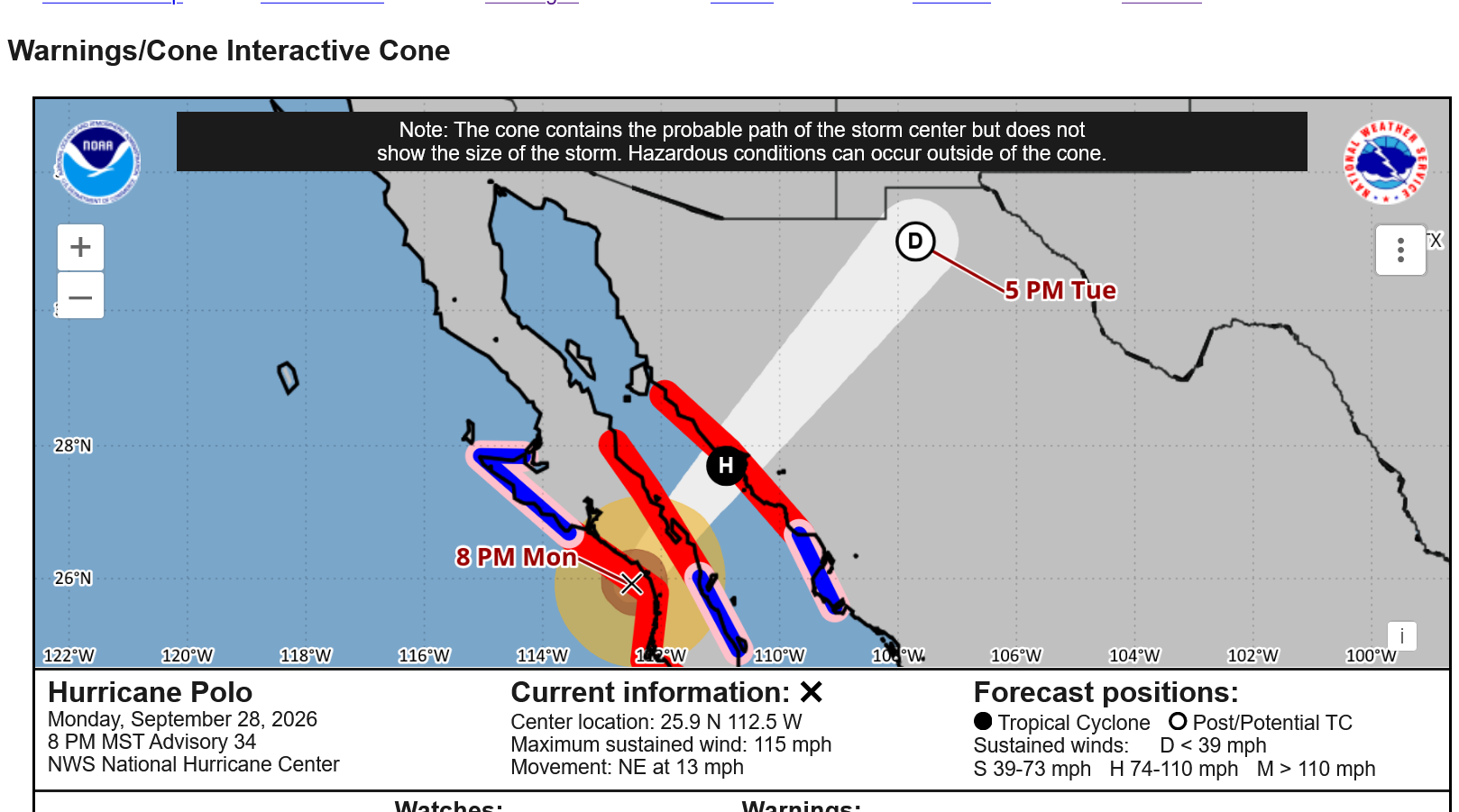
++++++++++++++++
Moisture from Polo will fuel heavy rain from the Rockies to the Midwest this week, with 4-8 inches of rain bringing drought relief but also threatening dangerous flash flooding in parts of Texas and New Mexico


https://www.marketforum.com/forum/topic/83844/#83848
7 Day Total precipitation below:
http://www.wpc.ncep.noaa.govcdx /qpf/p168i.gif?1530796126