
Newton's Laws of Motion
https://sciencenotes.org/newtons-laws-of-motion/

This is why we wear seatbelts!!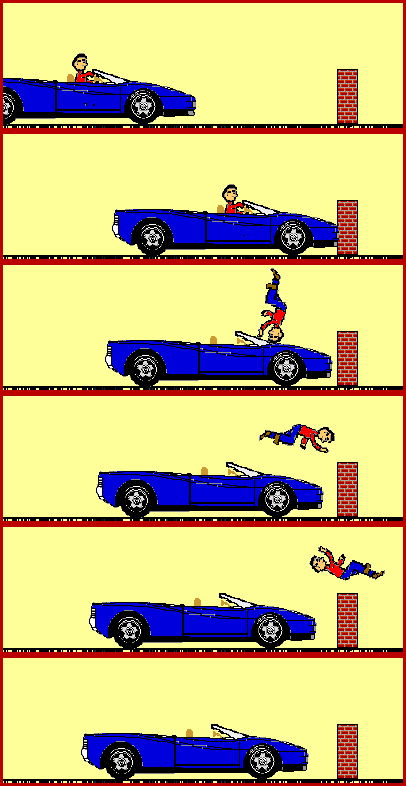
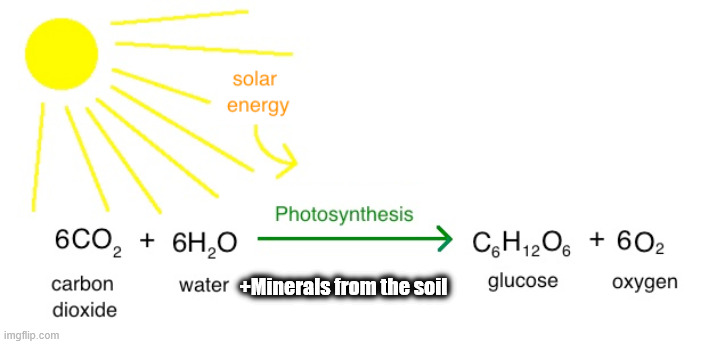
This is an indisputable law in biochemistry which is the combination of biology and chemistry.
Most life would not exist on our planet without photosynthesis.
CO2 is the building block for life and plays a critical role as a beneficial gas. CO2s optimal level for life is 900 parts per-million. Our Current, atmospheric level of CO2 is just less than half of that at 430 PPM.
DeathbyGREENING!
52 responses |
Started bymetmike - May 11, 2021, 2:31 p.m.
12 Fundamental laws of Physics
https://www.allenoverseas.com/blog/12-fundamental-laws-of-physics-everyone-should-know/
Some people's not always scientific interpretation:
https://wisdomuncover.com/7-laws-of-nature/
https://www.unstoppablerise.com/seven-universal-laws/
https://en.wikipedia.org/wiki/Scientific_law
Scientific laws or laws of science are statements, based on repeatedexperiments or observations, that describe or predict a range of natural phenomena.[1] The term law has diverse usage in many cases (approximate, accurate, broad, or narrow) across all fields of natural science (physics, chemistry, astronomy, geoscience, biology). Laws are developed from data and can be further developed through mathematics; in all cases they are directly or indirectly based on empirical evidence. It is generally understood that they implicitly reflect, though they do not explicitly assert, causal relationships fundamental to reality, and are discovered rather than invented
+++++++++++++++=
https://en.wikipedia.org/wiki/Scientific_method
The scientific method is an empirical method for acquiring knowledge through careful observation, rigorous skepticism, hypothesis testing, and experimental validation. Developed from ancient and medieval practices, it acknowledges that cognitive assumptions can distort the interpretation of the observation. The scientific method has characterized science since at least the 17th century. Scientific inquiry includes creating a testable hypothesis through inductive reasoning, testing it through experiments and statistical analysis, and adjusting or discarding the hypothesis based on the results

The scientific method is often represented as an ongoing process. This diagram represents one variant, and there are many others.
++++++++++++++
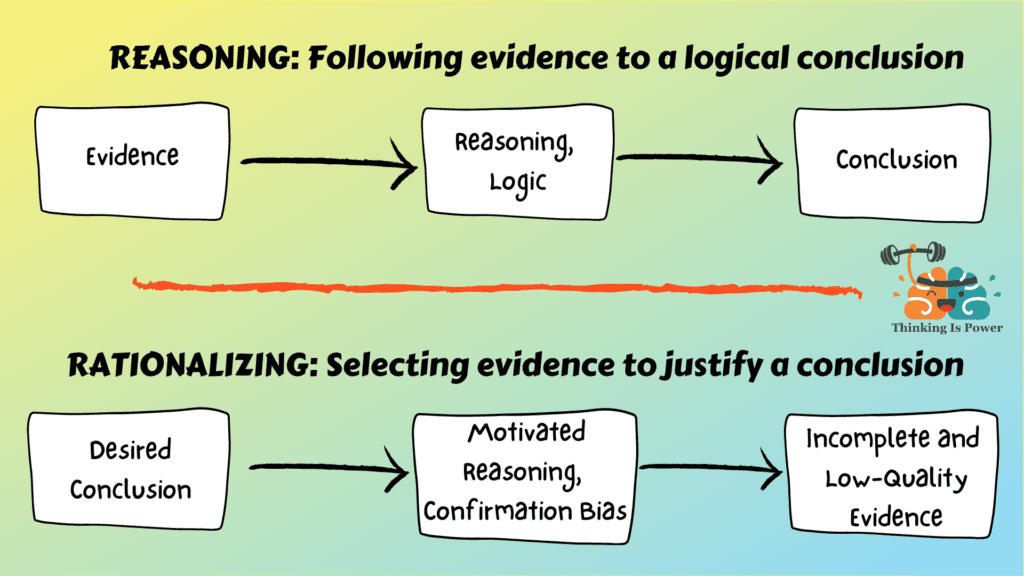
metmike: In contrast to what most of us do, trying to prove ourselves right by finding/using sources that repeat to us what we think that we know.........the scientific method takes a SKEPTICAL APPROACH of ourselves.
We vigorously fact check what we think that we know, first and foremost. We try to prove ourselves WRONG! We look for flaws in what we think that we know. Human cognitive bias causes us to naturally fight this, so we must intentionally apply the scientific method to offset our minds natural state.
https://thinkingispower.com/why-trying-to-prove-yourself-wrong-is-the-key-to-being-right/
https://en.wikipedia.org/wiki/Echo_chamber_(media)

In news media and social media, an echo chamber is an environment or ecosystem in which participants encounter beliefs that amplify or reinforce their preexisting beliefs by communication and repetition inside a closed system and insulated from rebuttal.[2][3][4] An echo chamber circulates existing views without encountering opposing views, potentially resulting in confirmation bias. Echo chambers may increase social and political polarization and extremism.[5] On social media, it is thought that echo chambers limit exposure to diverse perspectives, and favor and reinforce presupposed narratives and ideologies.[4][6]
The term is a metaphor based on an acoustic echo chamber, in which sounds reverberate in a hollow enclosure. Another emerging term for this echoing and homogenizing effect within social-media communities on the Internet is neotribalism.
The Internet has expanded the variety and amount of accessible political information. On the positive side, this may create a more pluralistic form of public debate; on the negative side, greater access to information may lead to selective exposure to ideologically supportive channels.[5] In an extreme "echo chamber", one purveyor of information will make a claim, which many like-minded people then repeat, overhear, and repeat again (often in an exaggerated or otherwise distorted form)[9] until most people assume that some extreme variation of the story is true.[10]
The echo chamber effect occurs online when a harmonious group of people amalgamate and develop tunnel vision. Participants in online discussions may find their opinions constantly echoed back to them, which reinforces their individual belief systems due to the declining exposure to other's opinions.[11] Their individual belief systems are what culminate into a confirmation bias regarding a variety of subjects. When an individual wants something to be true, they often will only gather the information that supports their existing beliefs and disregard any statements they find that are contradictory or speak negatively upon their beliefs.[12] Individuals who participate in echo chambers often do so because they feel more confident that their opinions will be more readily accepted by others in the echo chamber.[13] This happens because the Internet has provided access to a wide range of readily available information. People are receiving their news online more rapidly through less traditional sources, such as Facebook, Google, and Twitter. These and many other social platforms and online media outlets have established personalized algorithms intended to cater specific information to individuals’ online feeds. This method of curating content has replaced the function of the traditional news editor.[14] The mediated spread of information through online networks causes a risk of an algorithmic filter bubble, leading to concern regarding how the effects of echo chambers on the internet promote the division of online interaction.[15]
Members of an echo chamber are not fully responsible for their convictions. Once part of an echo chamber, an individual might adhere to seemingly acceptable epistemic practices and still be further misled. Many individuals may be stuck in echo chambers due to factors existing outside of their control, such as being raised in one
Cognitive biases
11 responses |
Started by metmike - April 24, 2022, 11:34 a.m.
Fact Checking/Scientific Method
Started by metmike - May 25, 2025, 12:10 a.m.
Heres a Teachable moment from an actual recent experience in an email conversation:
One of the biggest violations of the Scientific Method is Cherry Picking.
AI Overview
Cherry picking in science is a major violation of the scientific method.
It happens when a person or researcher looks only at data points or studies that fit their personal ideas, while ignoring all other data that proves them wrong
. This bad habit breaks the core rules of honesty and completeness in research. [1, 2, 3]
Why It Violates Science
Common Types in Research
How It Breaks Science
Common Types in Research
++++++++++++++
Cherry picking happens in EVERY realm!!!
For instance, 2 people could be having a debate on a topic in front of a group of people via email or online. It could be about anything........let's say about the impact of glucosamine on dementia from 1 study that just came out that has not been replicated by any other studies as required by the Scientific Method.
Person 1 could be seeking common ground to agree on and doing their best to see the other person's points using an open mind and the Scientific Method.
While Person 2, instead of having a similar mindset to come together, has a completely different frame of mind to win an argument and show they are right about everything. He could use a straw man attack(see below).......making up a position of Person 1 that doesn't exist but he knows is wrong so that he can attack the FAKE position. While refusing to even acknowledge the other person's attempts to agree on most of the items in the discussion
Person 2 could use a dishonest, anti scientific method and cherry pick select, misleading parts of the other person's view and refuse to include the most valid, PROVEN elements.
Then exploit AI by feeding the manipulated positions into AI to have AI judge it using their contrived, fake fact checking and pretend that this result was an honest and objective attempt to seek the truth because AI showed it. This sounds over the top but it just happened to me!
The reality is that they used technology dishonestly to hijack the discussion with cherry picking and the anti Scientific Method. Why would people behave this way?
Let me count the ways
It's especially sad when a person that we thought that we could trust uses this in an attack to damage us(you or me) to make them look good because of their ego and pathological, anti science mindset in this instance!
No, I'm not talking about Donald Trump this time. Somebody that we know personally and interact with frequently, for instance!
Maybe this has happened to you too!
The good news is that after the hurt or disappointment or betrayal of trust from expectations of honesty going into the discussion, we learn lessons if we're smart. I'm sharing this lesson right now.
We learn who to trust and who not to trust and choose to have close friendships with people we can trust.
In dysfunctional relationships, we have to make decisions that weigh the consequences of negative conversations with the importance of the relationship.
In a marriage, for instance we made serious vows and commitments to a person we love and are fully invested in...........thru sickness and in health. Thru good times and bad times. Especially thru bad times. We made a legal commitment. We should do everything possible to make the marriage work and make the other person happy, which in turn MAKES US HAPPY.." even if it takes tremendous sacrifice........as long as the other person is not pathologically abusive and irreconcilably toxic to the relationship. You can often make a marriage work well by making 90%+ of the effort. Some people are just blessed with more gifts to share and others need assistance from those with those gifts. Its often the recipe for some great marriages.
On the other hand, non marriage, voluntary communication and relationships outside of the work place or organizational level should be based on whether they enhance the relationship or drag you down. If they drag you down...........minimize contact or cut them loose.
NEVER hold grudges or hate people. Let them go and feel good that we took the high ground with integrity and know that we can't change them, nor should we try to change them (they are who they are based on this behavior) nor should we want to seek retribution nor should we hate them (hate always makes us feel much worse)but what we should want is to move forward with a positive attitude and no regrets while continuing on a quest to become a better person that makes the world better and more honest while speaking out against people and things opposing that.
+++++++++++++++++++++++
Here is another dirty trick that very dishonest people will use to try to win debates that happens in every field, including science. I'll bet you've witnessed it before. This attack was part of the same scheme imposed above in the same discussion, as there is a tremendous amount of overlap.
Using a straw man attack
AI Overview
more healthy fresh fruit to the school menu."
They say: So you want to ban all snacks and force us to only eat grass? That is cruel."
You say: This outlier study using science that contradicts previous studies might be a good one or it might not be but the scientific method requires replication of outlier studies to validate them.
They say: So you say that this new study does not use science
You say: I agree with most of your argument and see what you're saying with much of it but not with your application of the scientific method for this outlier study which is a key element we disagree on. They say: You are being disingenuous when claiming to agree with me because you used the word outlier and contradicted yourself and you don't really agree with me on anything.
You say: I sent you this link from a reputable source that agrees with your points as evidence that I agree with you about some things.
They say: The source that you sent shows that I'm right about everything and contradicts you.
+++++++++++++++++++
metmike: What should you do when somebody else is cleverly using the straw man argument in a debate that misrepresents YOUR position to others that are observers who don't know your position? ***Continue to sincerely emphasize what your actual, specific points are and call them out. If they double, triple and quadruple down, using even more clever dirty/sleazy tactics to try to win the argument instead of having respectful discourse with an open minded mentality, withdraw from that debate and further conversations with that person since they have proven themselves to be dishonest by intentionally refusing to recognize your real points after repeated sincere efforts with crystal clarity.
If it's somebody in the work place or other organizational relationships, do your best to minimize confrontations!
If it's your spouse, get marriage counseling. Help them to be better communicators. Don't give up unless they are serially abusive. Never continue a perpetually abusive relationship with no hope for resolving. Don't give up easy and always feel that you did YOUR best and be willing to do MORE THAN your share at many times....when it's a marriage. Most people will respond to our love by returning it. However, you can only control the love you send out not the amount of love that comes in. The cool thing is that in most cases they correlate strongly FROM CAUSATION with the Love going OUT coming first.
Mind blowing physics that impact weather forecasting+more
Started by metmike - Aug. 8, 2026, 12:26 a.m.
Why is Replication in Research Important?
https://www.aje.com/arc/why-is-replication-in-research-important
++++++++++++++++++++
Reproducibility and Replicability in Science.
https://www.ncbi.nlm.nih.gov/books/NBK547524/
+++++++++++++++++++
Replication crisis
https://en.wikipedia.org/wiki/Replication_crisis
+++++++++++++
https://en.wikipedia.org/wiki/Why_Most_Published_Research_Findings_Are_False
"Why Most Published Research Findings Are False" is a 2005 essay written by John Ioannidis, a professor at the Stanford School of Medicine, and published in PLOS Medicine.[1] It is considered foundational to the field of metascience.
In the paper, Ioannidis argued that a large number, if not the majority, of published medical research papers contain results that cannot be replicated. In simple terms, the essay states that scientists use hypothesis testing to determine whether scientific discoveries are significant. Statistical significance is formalized in terms of probability, with its p-value measure being reported in the scientific literature as a screening mechanism. Ioannidis posited assumptions about the way people perform and report these tests; then he constructed a statistical model which indicates that most published findings are likely false positive results.
While the general arguments in the paper recommending reforms in scientific research methodology were well-received, Ionnidis received criticism for the validity of his model and his claim that the majority of scientific findings are false. Responses to the paper suggest lower false positive and false negative rates than what Ioannidis puts forth.