
+++++++++++++
Nobody seems to be discussing that there was another pilot flying this place and focusing on the age of this pilot as the reason for the crash.
The reason for the crash was that they flew into some strong storms instead of the around them. I was watching the news and the weather-very closely at the time. I didn't' save the radar images but after the news broke and they showed the flight path, my immediate response was "what was the matter with the pilot????, why didn't they fly around those storms!!!'
Planes have their own radar systems and have access to the best weather reports. It was just insanely bad judgment to take an elevated risk to save XX minutes to fly thru storms of this magnitude when they had a much better and safer path.
These were not severe storms but they were STRONG storms. You just don't intentionally fly thru one of them when you can go around it because you don't want to deviate from the scheduled, most direct fight path.
++++++++++++++++
AI Overview
Doppler weather radar and ADS-B tracking data from the crash of Learjet 60 (N722BD) in South Florida on November 1, 2026, show that the aircraft flew directly into a deep, severe thunderstorm core near Wellington and West Palm
Learjet expert reveals crucial mistake pilots made before horrific Florida crash
++++++++++++++++++++
AI Overview
The National Transportation Safety Board (NTSB) has not determined any pilot errors in the November 1, 2026, fatal Learjet 60 crash near West Palm Beach, Florida, which killed 20-year-old co-pilot Nathalia Gadelha Filgueiras, 55-year-old captain Jeff Gregory, and seven passengers. [1, 2]The investigation is ongoing, and safety experts are examining several critical factors rather than concluding pilot error:
You can read more about the ongoing inquiry via the Miami Herald coverage of the cockpit audio and NTSB investigation. [1]
Great analysis by this Florida meteorologist!
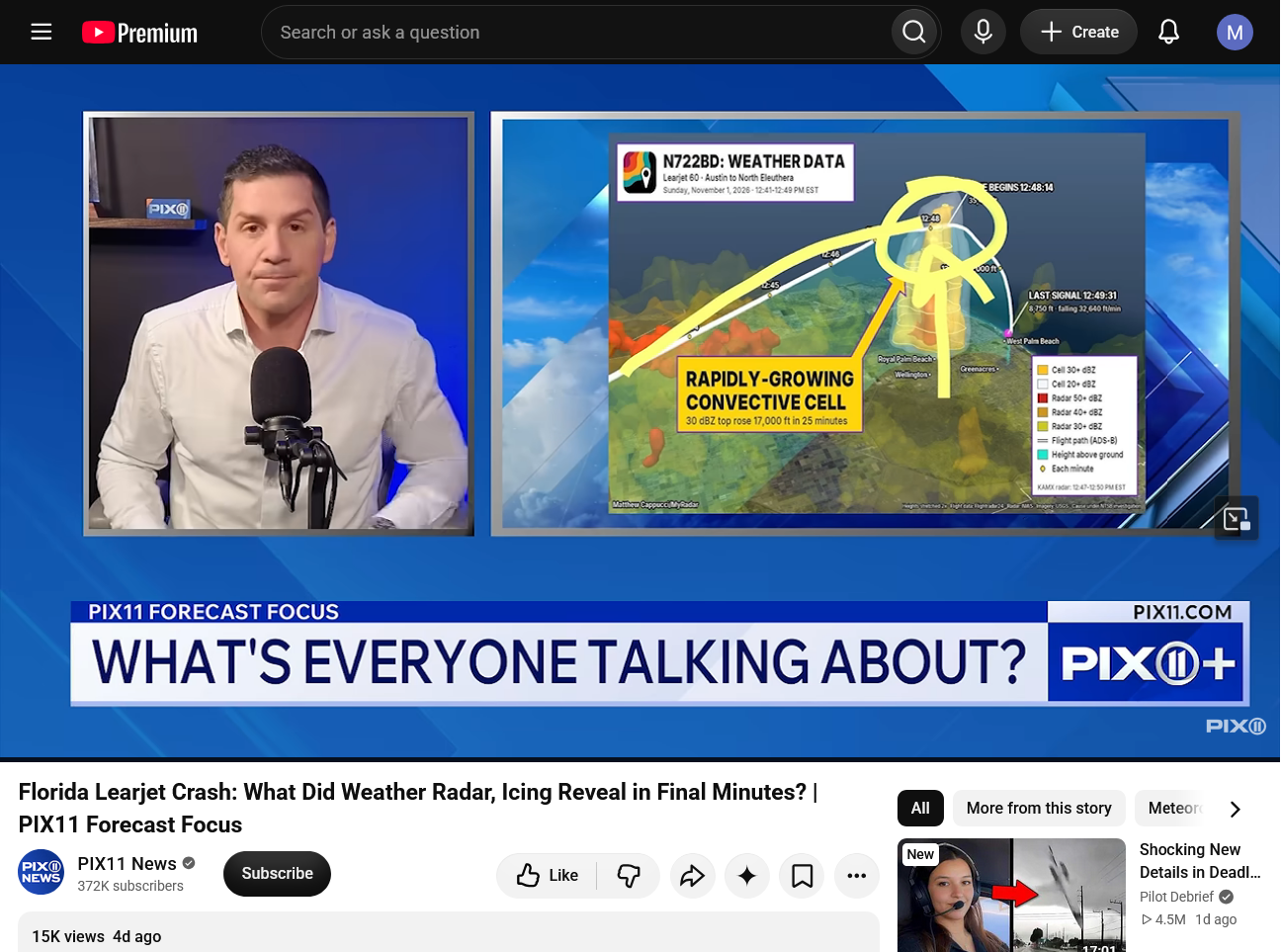
This plane flew directly into a rapidly growing storm that was MUCH TALLER than any height they could have reached to get above it.
Some of the storms in the area had tops close to 50,000 and were rapidly popping up. Their plane was never going to get above 39,000 feet!
Regardless of whatever they find the actual cause was(it could have been something different-which is doubtful but we don't have all the facts) it's really dumb for a pilot to fly directly into the extreme turbulence of a strong storm that is higher than they could possibly fly when they had the option to fly around the bad weather.
We have the technology to identify the locations of these storms and where new ones could pop up and the locations where they will NOT form. THEY had access to that information but ignored it.
That isn't just an opinion from an operational meteorologist of 45 years. It's reporting what happened. We know from verbal communications the they were requesting permission to climb a bit higher(which was just a huge mistake that made it worse).
The request should have been for a better flight path AROUND the huge storms. They never asked for that. I'm wondering if the people on the ground are not partially responsible for not telling them to fly around the stormst??? The ground is always going to have far more weather information that the pilots in the cockpit(other than their dashboard doppler radar that shows whats in their path).