
First place is no surprise to us, but second place is.
By Emily Hunt
Published on July 6, 2025
https://www.reddit.com/r/Infographics/comments/1dd1r25/most_popular_soda_by_us_state/
+++++++++++++++++++
Go to Infographics r/Infographics • slappywhyte

r͏s͏n͏o͏p͏S͏o͏e͏t͏d͏ ͏b͏,͏h͏5͏O͏6͏4͏m͏2͏a͏4͏1͏0͏9͏1͏0͏h͏3͏2͏3͏u͏h͏g͏f͏r͏a͏8͏f͏ ͏2͏7͏e͏c͏a͏m͏3͏t͏1͏f͏0͏u͏t͏h͏f͏8͏i͏o͏a͏1͏ · Largest Soft Drinks Markets In The World (2023).Revenue in the Soft Drinks market amounted to US$0.85 trillion in 2023. The market is expected to grow annually by 4.15% (2023-2027). The United States has the biggest share of the soft drinks market in the world with an estimated value of $328 billion in 2023.
The United States, with our 354 million people, consumes 8 times more soft drinks than #2, China below even though China has 1.4 million people(4 times as many).

+++++++++++++++++++++++++
This is for the country of India with 1.5 billion people, the most most populous in the world but not in the top 8 in the world for soft drink consumption.
++++++++++++++
This article is more than 9 years old
Campaigners in drought-hit Tamil Nadu say it is unsustainable to use 400 litres of water to make a 1 litre fizzy drink
+++++++++++++++++++++++
AI Overview
https://recyclenation.com/2010/10/blog-action-day-recycled-water-footprint-beverages/
Blog Action Day, a yearly event for bloggers to spread awareness of important global issues, is concentrating on the topic of Water in 2010. 1-800-RECYCLING.com is proud to participate in its second Blog Action Day, focusing on water reuse and conservation issues. Raising a glass to the end of the work week with a tall, cool, frosty H2O doesn’t quite generate the same celebratory vibe as knocking back a couple of glasses of wine or beer. Until someone figures out how to duplicate that old familiar buzz using hydrogen and oxygen molecules, alcohol will likely remain the winner of the beverage popularity game. Still, certain social situations dictate conducting oneself with an absolutely lucid mind and demeanor, so fortunately, caffeine and sugar-enhanced liquids are also on the scene to pick up the slack.Whatever your personal liquid vice, all of it requires plain old water to come to fruition. The exact volume necessary to manufacture today’s most popular drinks, however, varies quite significantly depending on the type. It’s not as simple as using several hundred gallons of water during the beer brewing process or diligently hydrating grape vines in the field. If you consider the entire scope of production — farming the raw materials necessary to flavor our beverages, converting them into liquid form, packaging the final product and shipping it to global destinations — liquid refreshment in countless incarnations ends up generating a sizable eco-footprint. If you’re eager to streamline your personal water consumption, you might want to take a cold, hard look at the beverages crammed in your refrigerator. Unless you’re guzzling straight from the stream or whipping up your own DIY recipes, chances are pretty good that you’re slurping something with a hefty energy and water footprint.
++++++++++++
One thousand liters of water is typically used to produce 1 liter of milk — meaning that a 200-milliliter glass has a 200-liter water footprint — so this is one instance in which you can easily justify knocking back a beer in honor of Mother Nature instead!
+++++++++++++
I put milk in my cereal every morning but when I run out, use water instead with no big deal. My wife, Deb thinks this is gross. It does taste different, especially with WARM water(not as good) but it's amazing how we acquire a "taste" for things based purely on consuming them in exactly the same way for most of our lives.
For sure that goes for our favorite beverages/soft drinks!
The reason that I started this thread was because the restaurant we went to yesterday didn't have Diet Mt. Dew that I drink, so I just had water. At home, I drink my Diet Mt. Dew's at room temperature which my wife think's is unappealing.
If I don't finish it, because it's warm, all the CO2 comes out fast and the next day, it's completely flat. Gross to my wife and for sure not as tasty but I will always drink warm, flat Mt. Dew instead of throwing it out.
https://www.kegerators.com/carbonation-table/
+++++++
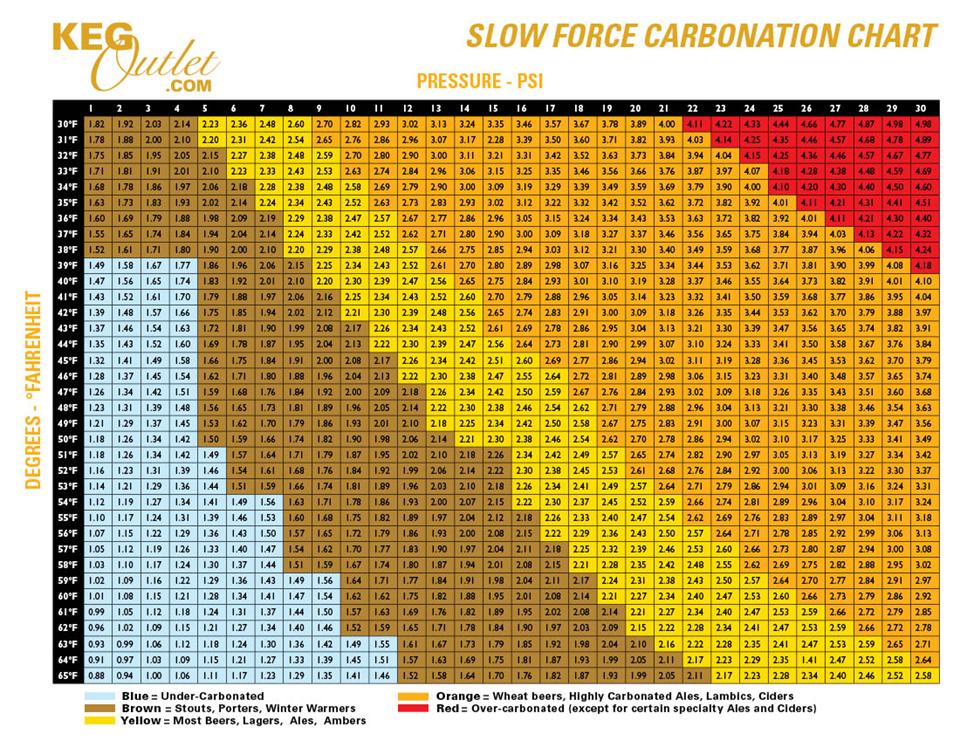
+++++++++++++++++
AI Overview
AI Overview
Warm soft drinks lose carbon dioxide ( ) much faster than cold soft drinks because higher temperatures both reduce
  solubility and increase the kinetic rate of gas degassing. Henry’s Law dictates the maximum amount of gas that can stay dissolved at equilibrium, while chemical kinetics governs how fast that gas escapes once the system is opened.
1. Henry's Law and EquilibriumHenry's Law states that the concentration of a dissolved gas ( ) is directly proportional to the partial pressure (
 ) of that gas above the liquid:
  Where
Where  is the Henry's Law constant.
 at high pressure (


 ). According to the law, this high pressure forces a large amount of
  to dissolve into the liquid (
 is high).
  escapes instantly, dropping the partial pressure of
  in the headspace to the ambient atmospheric level (

 ). Because
  has plummeted, the new equilibrium concentration (
 ) dictated by Henry's law drops close to zero. The solution becomes highly supersaturated, forcing the
  out of the drink until it eventually goes flat.
 2. The Impact of Temperature
Temperature alters both the equilibrium target (thermodynamics) and the speed at which the drink reaches that target (kinetics). Reduced Solubility (Thermodynamics) The dissolution of  in water is an exothermic process (it releases heat):
  According to Le Chatelier's principle, adding heat (raising the temperature) shifts the equilibrium to the left, driving the gas out of the liquid. This means the Henry's Law constant (
 ) decreases as temperature rises. Warm soda inherently holds less
  at equilibrium than cold soda. Accelerated
  Loss Rate (Kinetics) While Henry's Law tells us how much gas will eventually escape, kinetic theory tells us how fast it happens. Higher temperatures accelerate the loss rate due to two factors:
 molecules to break free from the surrounding water cage and form gas bubbles.
  molecules through the liquid toward the surface or toward bubble nucleation sites
+++++++++++++++++
https://en.wikipedia.org/wiki/Henry%27s_law
In physical chemistry, Henry's law is a gas law that states that the amount of dissolved gas in a liquid is directly proportional at equilibrium to its partial pressure above the liquid. The proportionality factor is called Henry's law constant. It was formulated by the English chemist William Henry, who studied the topic in the early 19th century.