A huge pattern change will elevate the risk of flooding rains in parts of the US, starting late in the first week of March.
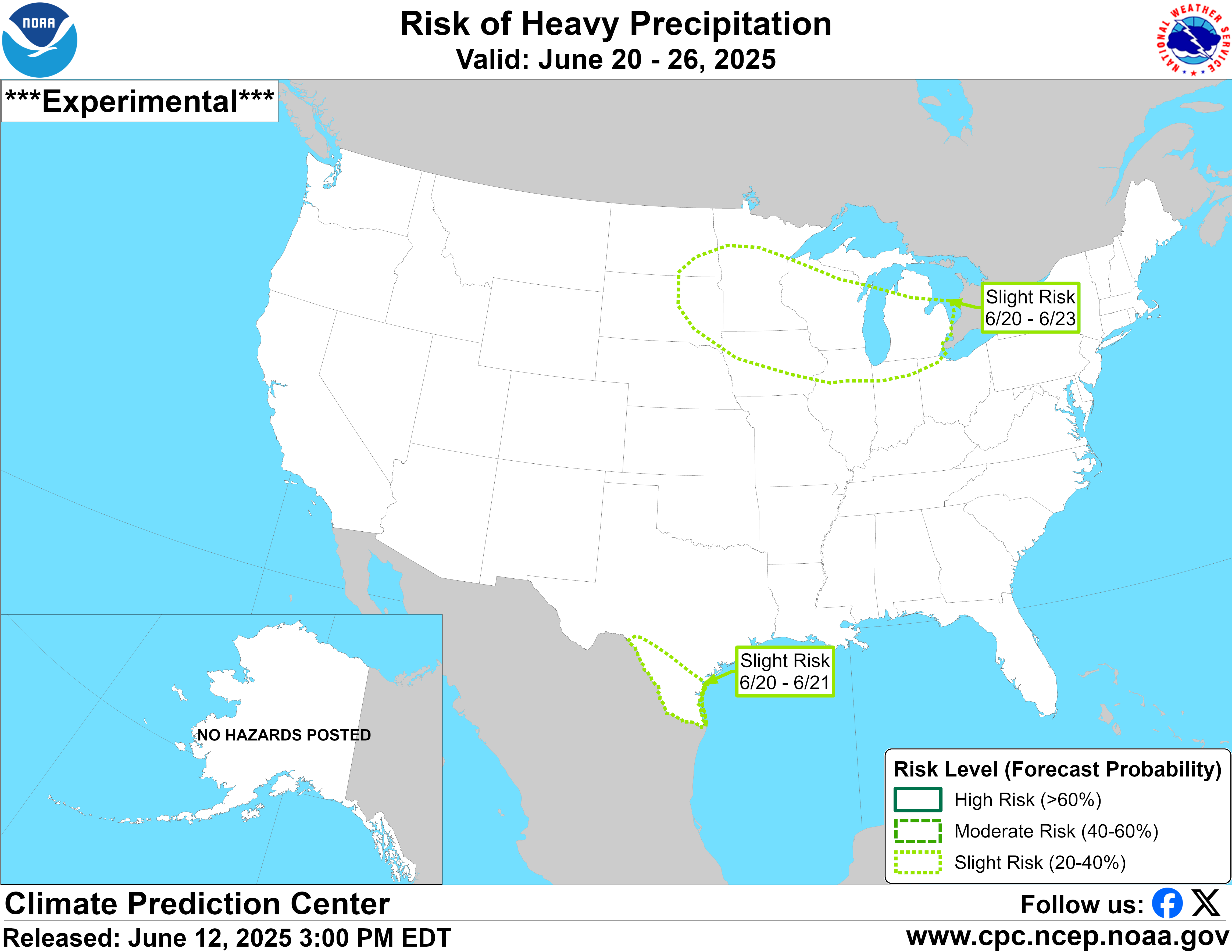
https://www.cpc.ncep.noaa.gov/products/predictions/threats/precip_probhazards_d8_14_contours.png
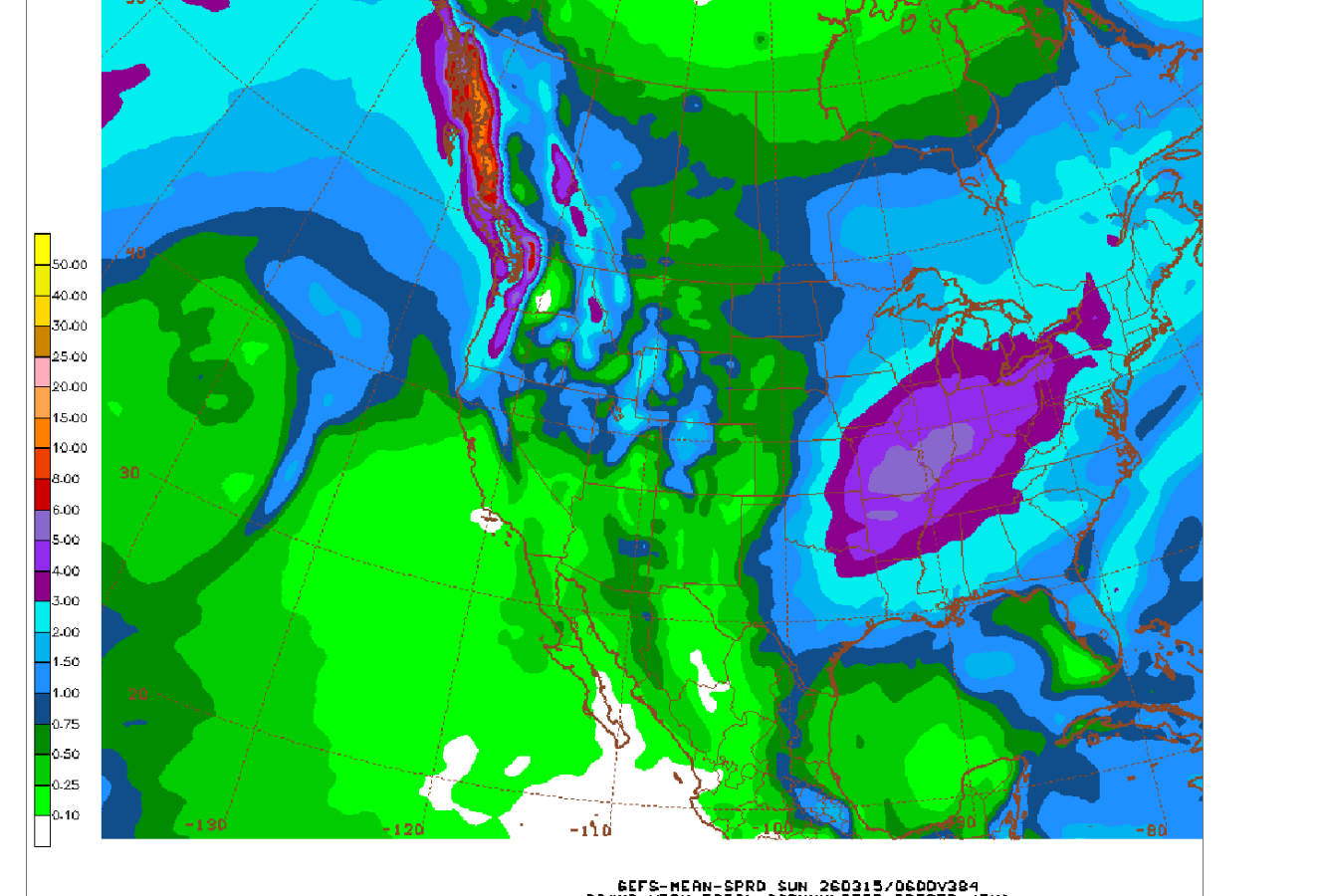
This is likely being UNDER done(especially south and west of the heaviest rains). The center band is 5+ inches of rain. This was the last 6z GEFS model total rain forecast for the next 384 hours(16 days).
https://mag.ncep.noaa.gov/Image.php
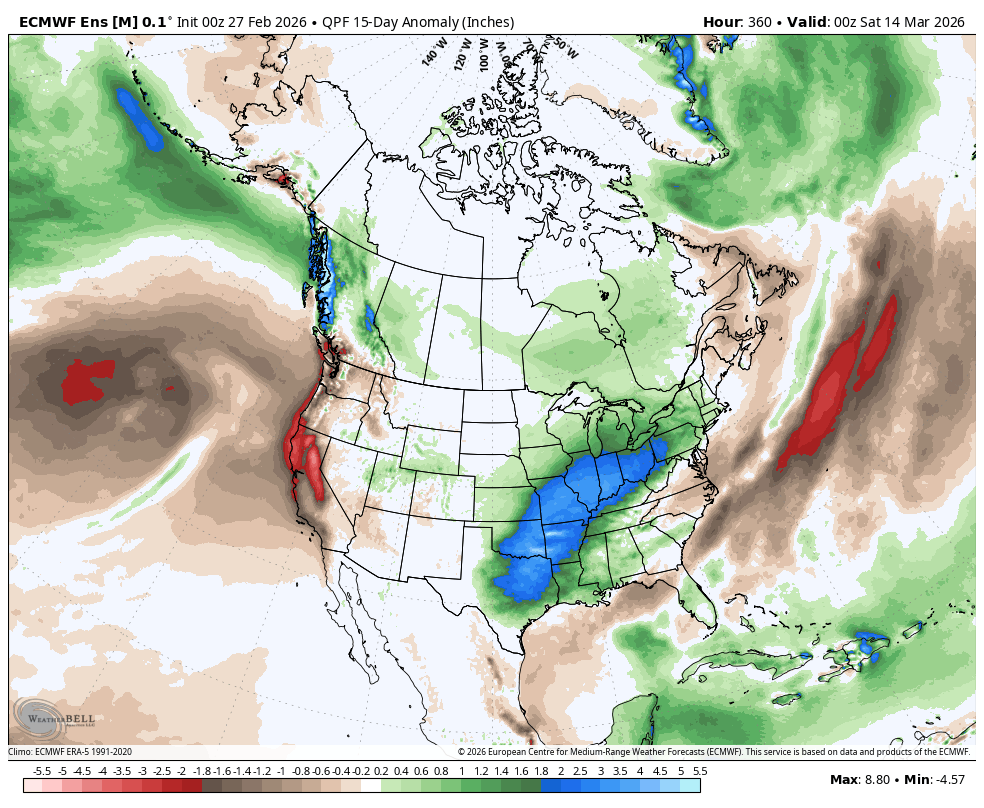
This was the total rainfall anomaly from the last 0z European Ensemble model for the same period.
The upper level pattern will take on a completely different pattern than we've seen all Winter, which has been very dry thanks to the La Nina and dry air masses coming down from the north.
https://mag.ncep.noaa.gov/Image.php
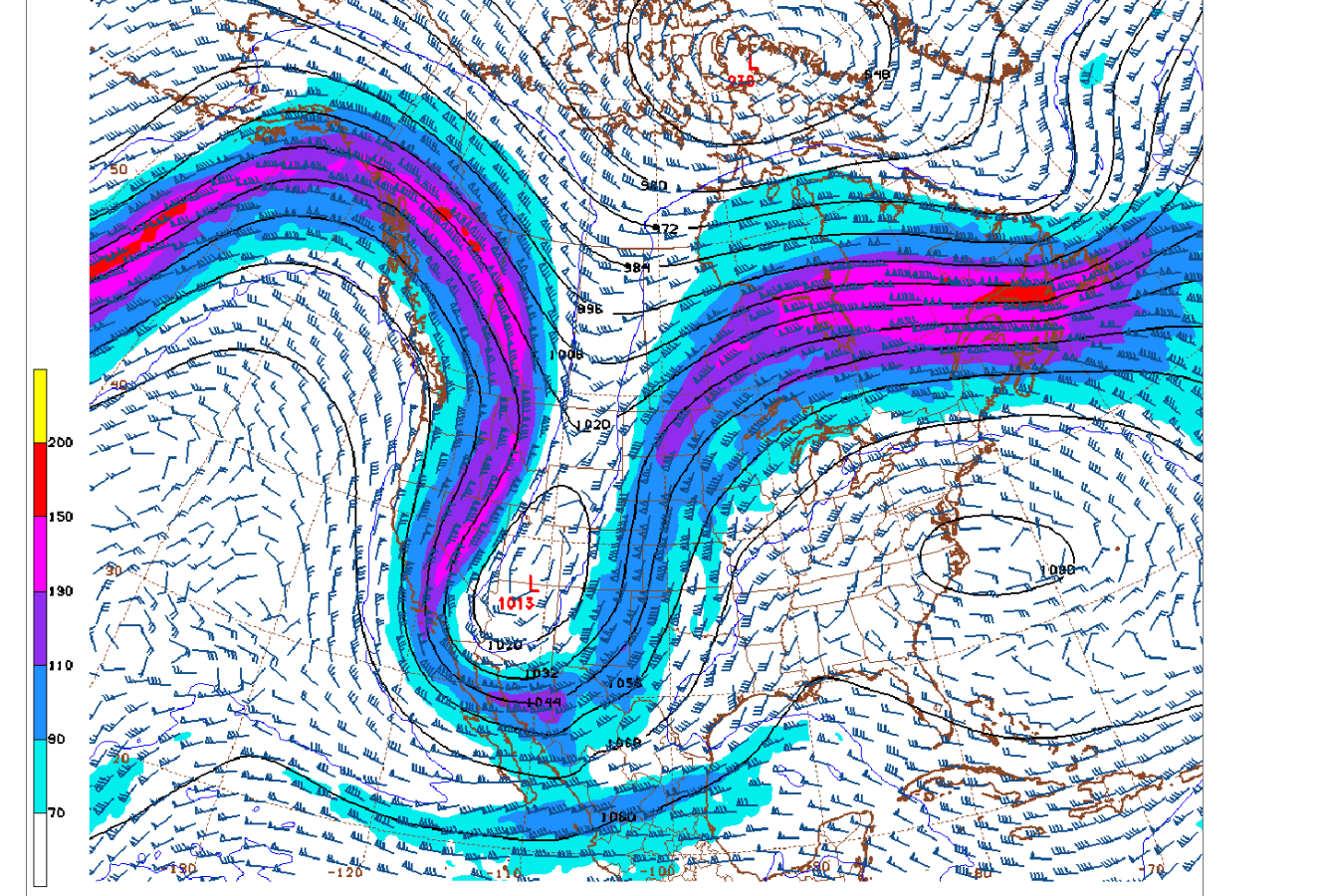
This is the jet stream(steering currents) above 30,000 feet March 9th, 10+ days from now.
The main feature of note that's not been seen in many months is the upper level high in the Southeast. We've had plenty of warm air masses this Winter but they were always dried out PACIFIC air masses that tracked west to east across the country. Lacking significant moisture.
This particular pattern is a textbook Gulf of Mexico, deep moisture air transporting pattern on the backside of the huge upper level high in the Southeast.
Any sort of perturbations in the warm/humid air on the periphery of the high will have unlimited moisture to work with. In this case a deep trough and jet stream will provide the organized lift to a huge area that will be loaded with juicy, unseasonably high precipitable water values. These large scale features in the new pattern many be very slow to move(not very progressive) which increases the risk of excessive rains over numerous states, starting from the South-Central US and extending northeastward to the Ohio River Valley.